
SEO content optimization tools analyze the pages ranking for a target query and turn that data into practical recommendations for topic coverage, structure, entities, questions, and content gaps. The useful ones do more than produce a score: they help writers research, brief, draft, refresh, and connect content without replacing editorial judgment.
This guide compares 11 platforms by the workflow they fit, their core strengths, pricing, and tradeoffs. If you want the short version: Surfer SEO and Clearscope are strong page-level optimizers; Frase and Scalenut are better suited to research-to-draft workflows; MarketMuse is built around site-wide topical authority.
NeuronWriter and Dashword emphasize value and simplicity; Semrush and SE Ranking bundle content features into broader SEO suites; and Rankability is positioned around agency workflows that include SEO and AI-search monitoring. No tool guarantees rankings or AI citations.
Best SEO Content Optimization Tools
- Surfer SEO – Best for all-around page-level optimization
- Clearscope – Best for editorial teams
- Frase – Best for research and content briefs
- MarketMuse – Best for topical authority and site-wide planning
- NeuronWriter – Best budget-friendly optimizer
- Semrush Content Toolkit – Best for teams already using Semrush
- Scalenut – Best for AI-assisted research-to-draft workflows
- Dashword – Best for simple content optimization
- Rankability – Best for agencies combining SEO and AI-search workflows
- WriterZen – Best for keyword clustering and content planning
- SE Ranking – Best for teams wanting content features inside an all-in-one SEO platform
How We Evaluated These Tools
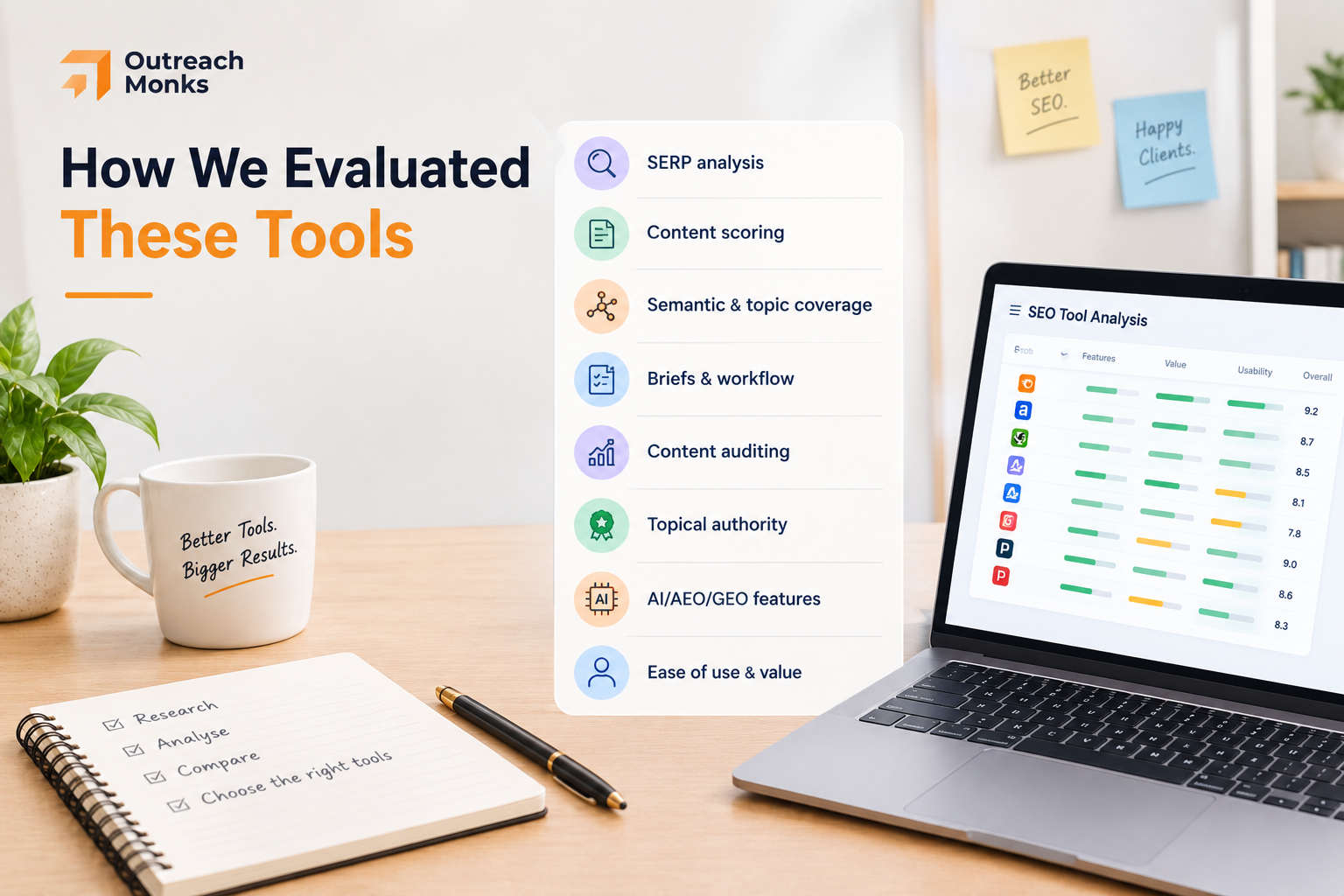
The evaluation is based on hands-on content-program experience across SaaS guides, agency landing pages, and comparison posts. Instead of treating a high optimization score as the goal, we focused on whether each platform produces recommendations that remain useful once a human editor applies them.
| Factor | What We Looked For |
|---|---|
| SERP analysis | Whether the tool surfaces patterns from pages currently competing for the query. |
| Content scoring | Whether the score helps identify coverage gaps without encouraging keyword stuffing. |
| Semantic & topic coverage | Whether recommendations include related concepts, entities, questions, and subtopics. |
| Briefs & workflow | How effectively research turns into a usable brief and writing workflow. |
| Content auditing | Whether published content can be reviewed and refreshed, not just created. |
| Topical authority | Whether the platform supports clusters, gaps, and site-wide planning. |
| AI/AEO/GEO features | Whether AI-search monitoring or optimization is treated separately from conventional Google scoring. |
| Ease of use & value | Learning curve, collaboration, limits, seats, and price relative to the intended user. |
11 Top SEO Content Optimization Tools in 2026
Compare features, pricing, strengths, and use cases to find the right content optimization tool for your workflow.
1. Surfer SEO – Best for All-Around Content Optimization
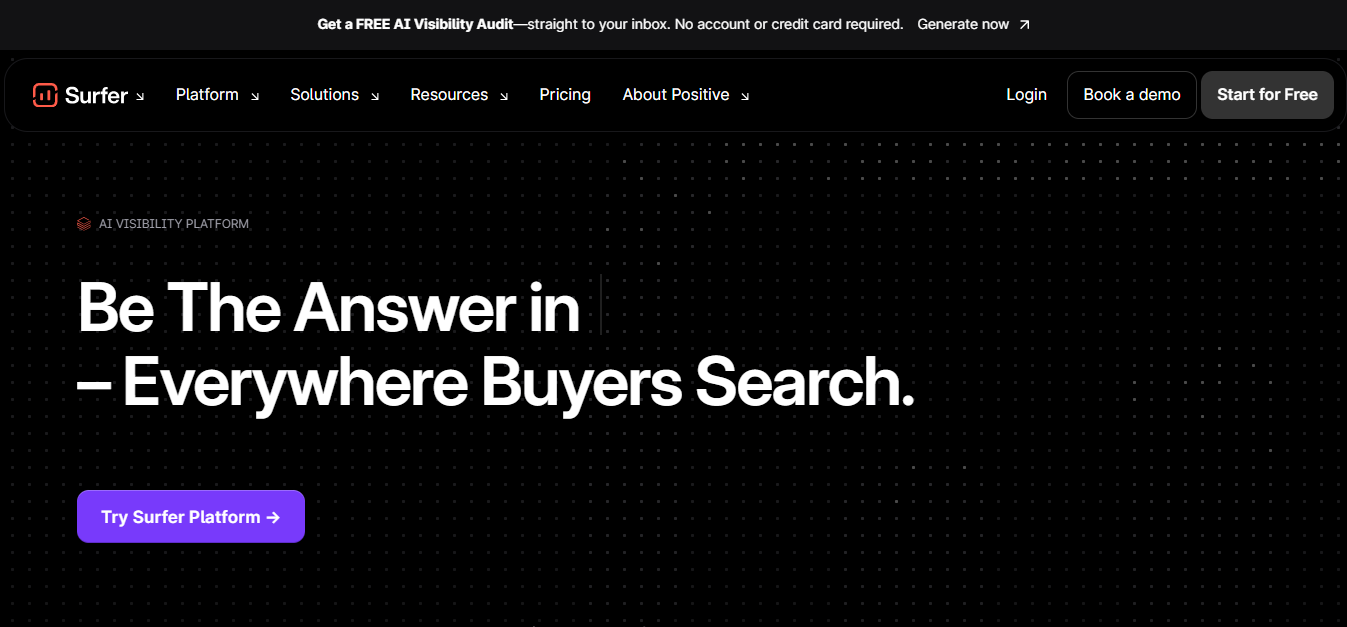
Surfer is the easiest tool on this list to understand in practice: you open a target keyword, compare your draft with the pages already ranking, and get live guidance on coverage, structure, length, and related terms. It is useful when you want one workspace for research, writing, and on-page checks instead of moving between several tools.
The main thing to watch is the score. It is helpful for spotting gaps, but chasing every suggested term can make a draft repetitive. Surfer works best when an editor treats the recommendations as prompts, not instructions. Pricing starts at roughly $79 per month on annual billing, and costs can rise as usage and team needs grow.
This is a good fit for SEO teams and content marketers that want a strong all-around optimizer and are comfortable applying editorial judgment to the recommendations.
2. Clearscope – Best for Editorial Teams
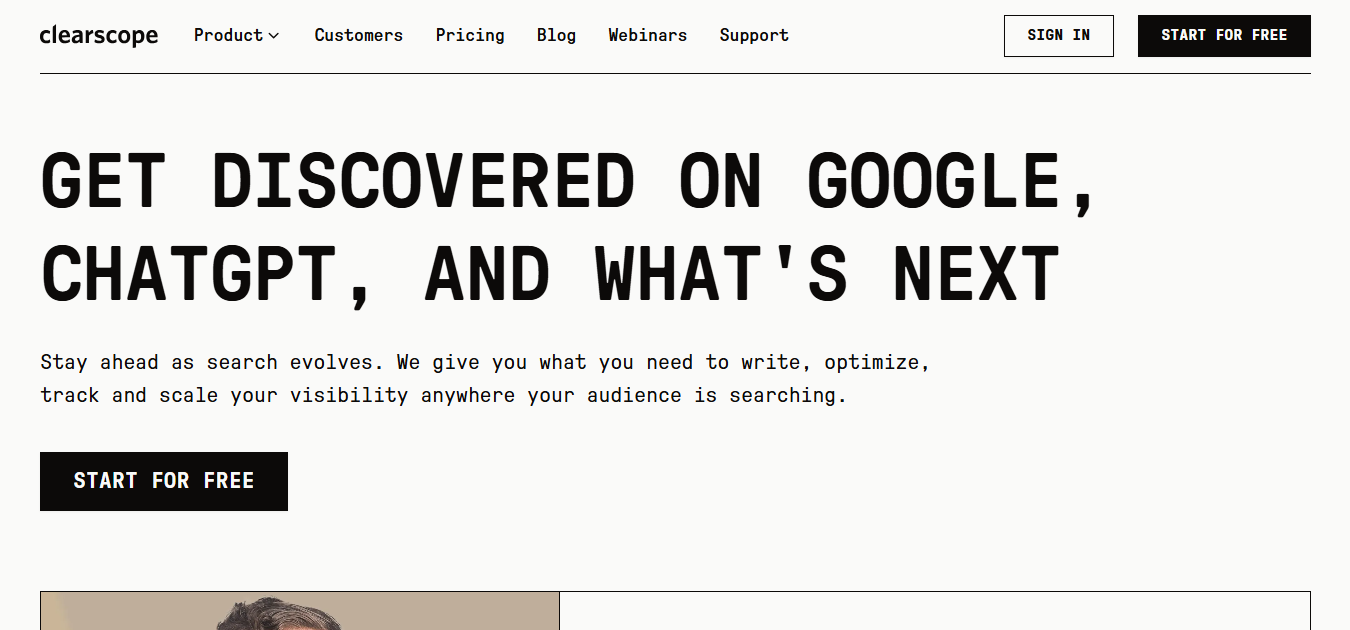
Clearscope feels more like an editorial tool than a broad SEO suite. Its reports are clean, the grading is easy to understand, and writers can see which topics and terms may be missing without having to learn a complicated dashboard. That makes it especially easy to hand off to editors, freelancers, or content teams that are not deeply technical.
It does not try to cover every part of SEO, and that is both its strength and its limitation. Teams that want rank tracking, audits, and broader campaign data will still need other tools. Pricing starts at around $129 per month, so it makes more sense for teams that value a smooth writing workflow than for someone looking for the cheapest option.
It suits editorial teams that care more about clarity and consistency than having an all-in-one SEO platform.
3. Frase – Best for Content Research and Briefs
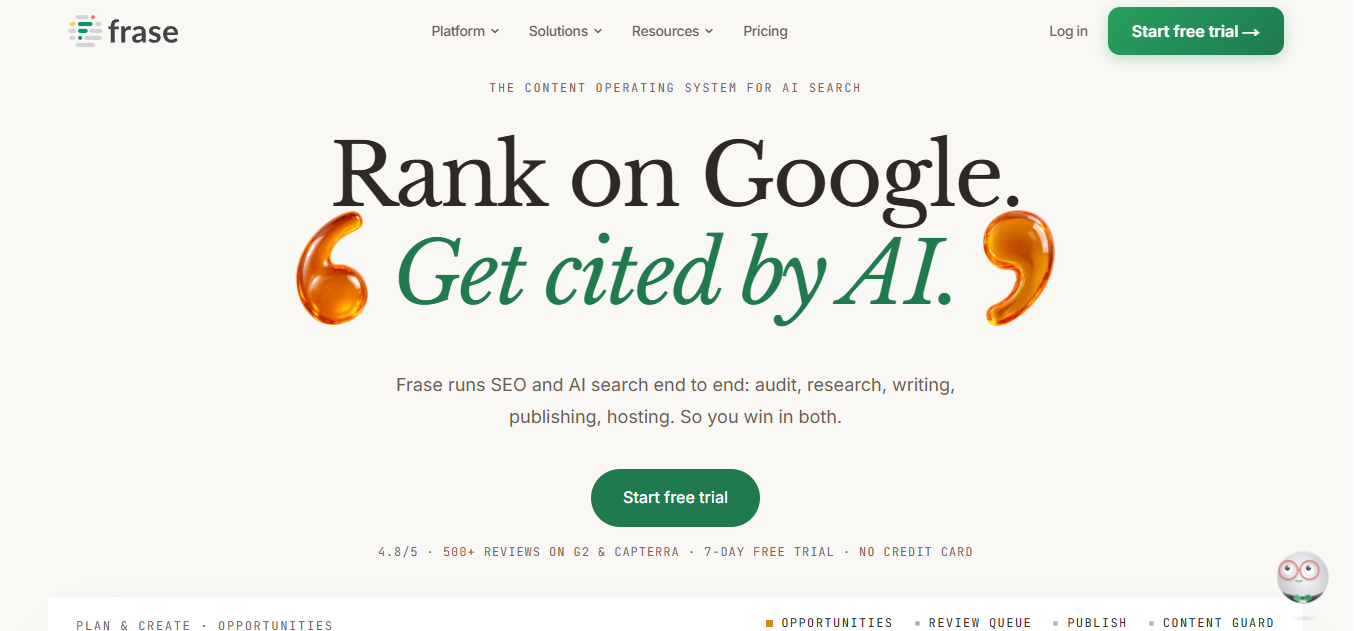
Frase is most useful before the first draft is finished. It can turn SERP research, common questions, and competing pages into a usable brief quickly, which helps when research and outlining take more time than the writing itself. The same workspace also includes topic analysis, AI-assisted drafting, and optimization checks.
For teams mainly trying to refresh and fine-tune old pages, a dedicated optimizer may go deeper. Frase makes more sense when the bigger bottleneck is getting from keyword to brief to draft efficiently. Plans start at roughly $39 per month on annual billing.
Writers and content teams will get the most from it when research and briefing are the slowest parts of the process.
4. MarketMuse – Best for Topical Authority
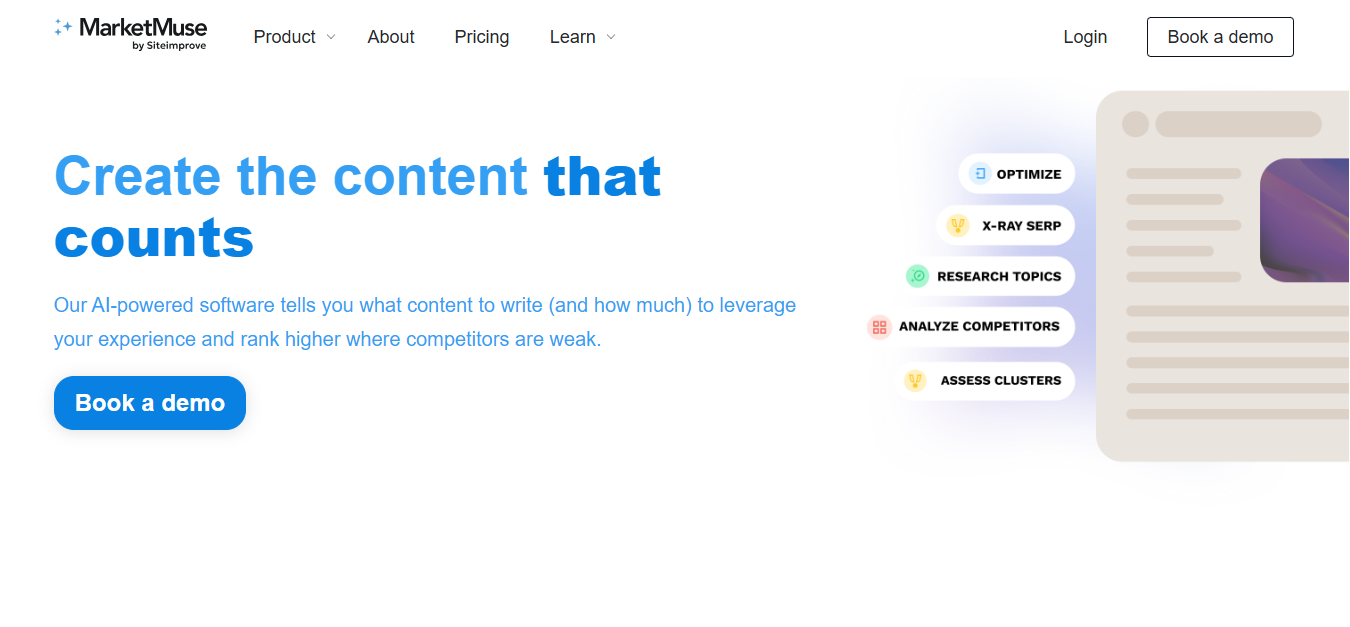
MarketMuse looks beyond a single article. Its real value is in showing where a site has content gaps, which topics belong together, and where deeper coverage may help build authority over time. That makes it a different kind of tool from editors that focus mainly on improving one page for one query.
If you only publish occasionally or just need a quick score for a draft, it can be more than you need. But for publishers and larger content programs, the site-wide view can be useful when deciding what to create next. A free plan is available, while paid plans are generally positioned around custom or enterprise needs.
MarketMuse is most useful for content strategists, publishers, and enterprise teams planning topic clusters and long-term coverage.
5. NeuronWriter – Best for Budget-Friendly Optimization
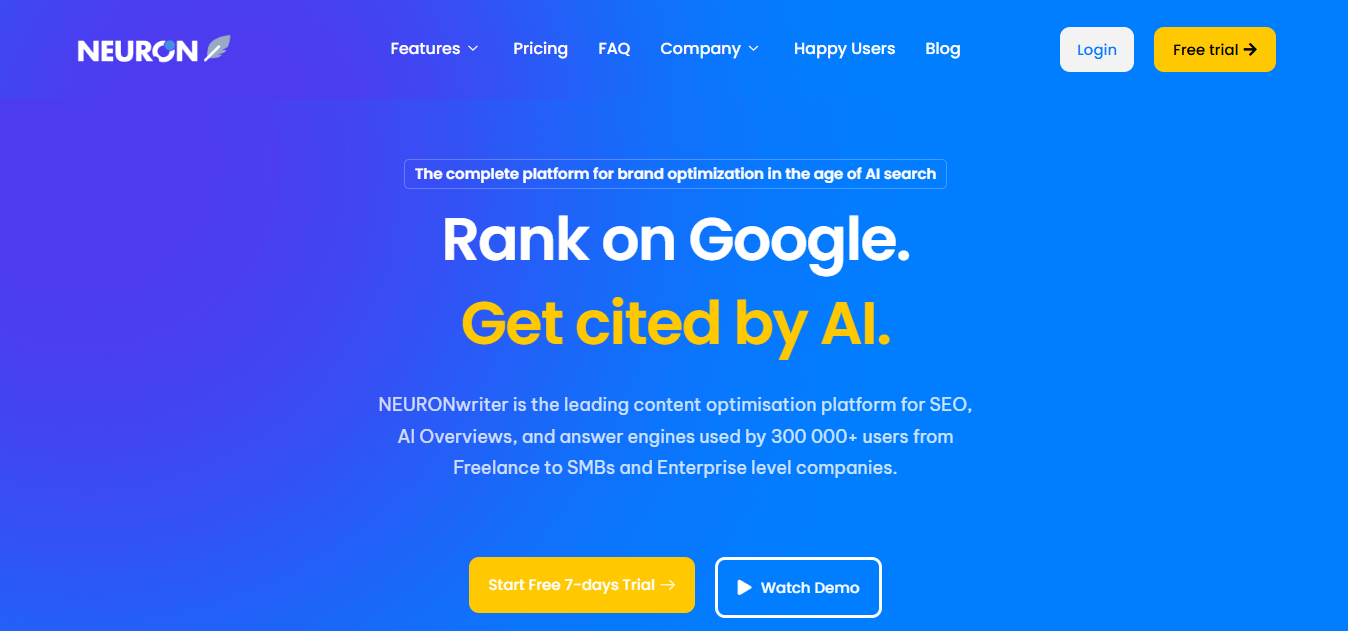
NeuronWriter covers most of the core features people expect from a content optimizer without the premium entry price. It includes NLP-based recommendations, competitor analysis, content scoring, semantic terms, AI writing features, and Google Search Console integration.
The tradeoff is the interface, which feels denser than Surfer or Clearscope. That matters less if price is the priority and your team is comfortable with SEO tools. Plans start at around $23 per month, making it one of the more accessible options in this roundup.
For freelancers and small teams, it is a practical way to get solid optimization features without paying premium-tool prices.
6. Semrush Content Toolkit – Best for Teams Already Using Semrush
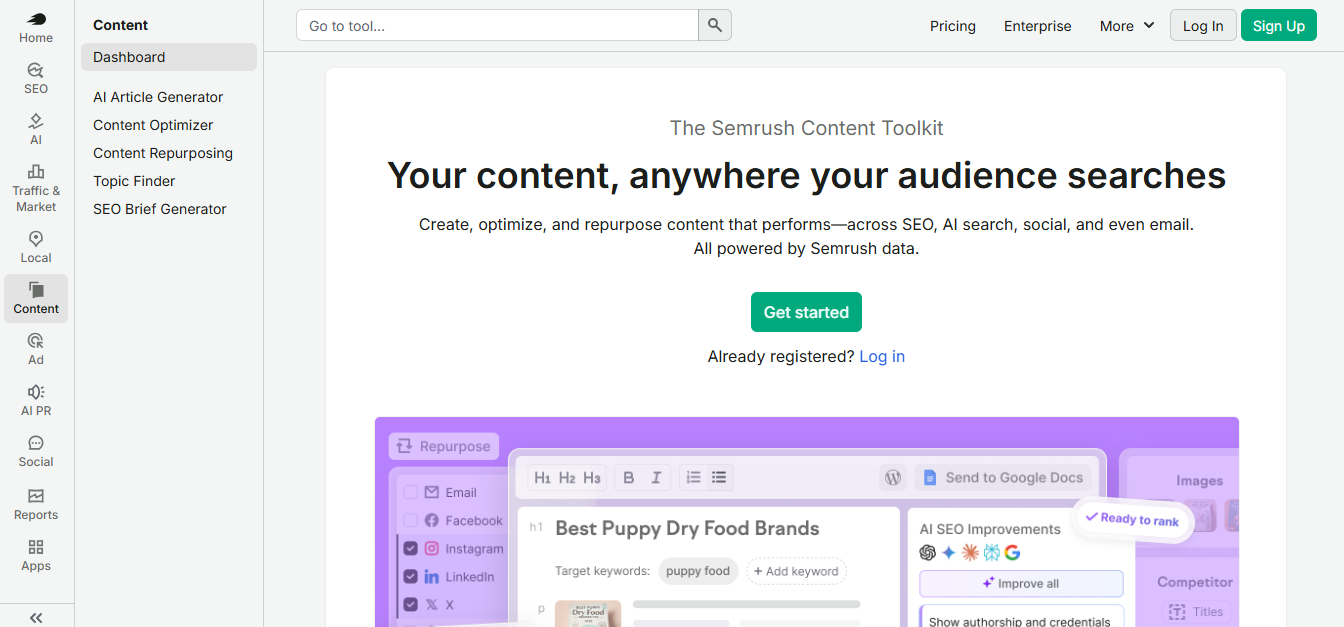
Semrush makes the most sense here when your team already uses the rest of the platform. Keyword research, competitor data, content briefs, the SEO Writing Assistant, optimization, and tracking can all sit beside your existing ranking and backlink workflows.
As a standalone content optimizer, it is harder to justify against specialist tools. The advantage is convenience: there is less data fragmentation and less need to add another subscription. Semrush plans start at roughly $139 per month, although the real cost depends on the plan and any add-ons you need.
It makes the most sense for SEO teams already working inside Semrush and wanting content optimization connected to the rest of their SEO data.
7. Scalenut – Best for AI-Assisted Content Workflows

Scalenut is built for teams that want research, planning, AI-assisted drafting, and optimization in one flow. You can move from a topic to a brief and then into a draft without switching tools, which can be useful when content volume is high.
That speed also creates its biggest risk: the faster the draft is produced, the more important the editing process becomes. AI output still needs fact checking, examples, stronger opinions, and brand voice before publishing. Pricing starts at about $39 per month.
Scalenut fits teams producing content at scale, especially when a reliable human review process is already in place.
8. Dashword – Best for Simple Content Optimization
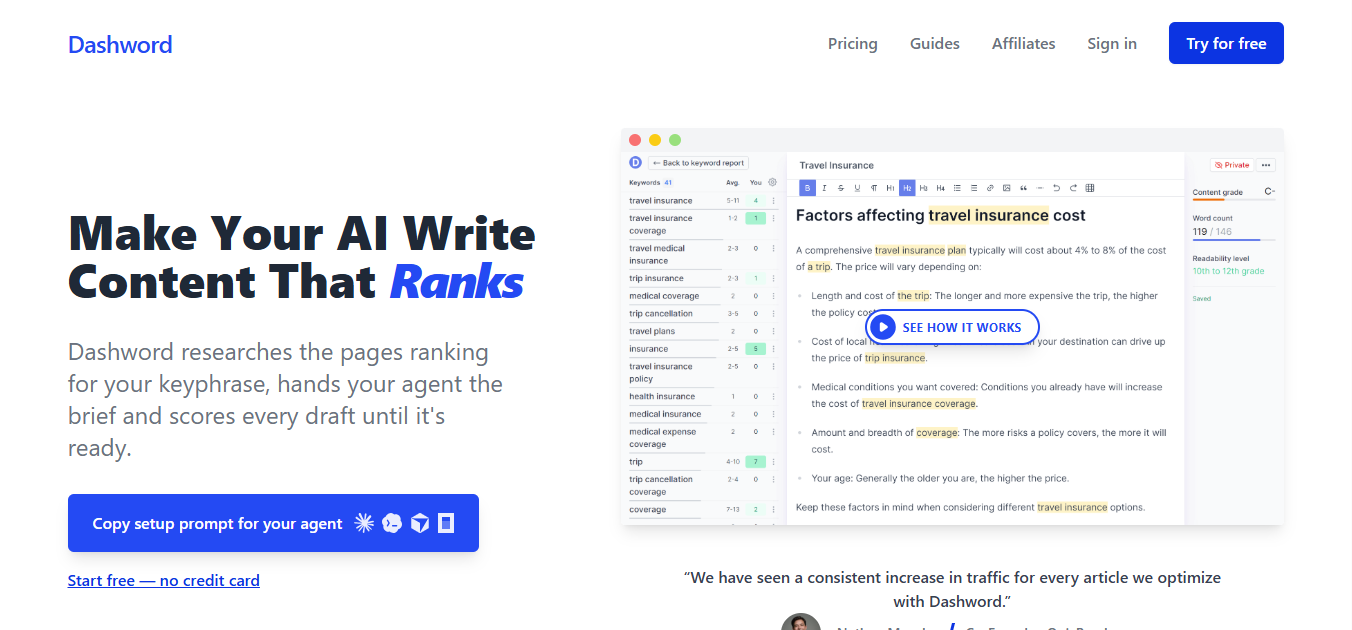
Dashword keeps the workflow fairly simple. It focuses on SERP analysis, briefs, topic recommendations, and content scoring without adding a large number of extra modules. For a small team that mainly wants to check whether a draft covers the right ground, that simplicity can be a benefit.
You will outgrow it sooner if you need site-wide topic modeling, advanced governance, or a broader SEO stack. Pricing starts at around $99 per month, so the value depends on whether you prefer a focused tool over a larger platform.
Small teams that want straightforward briefs and optimization checks, without a steep learning curve, are the clearest fit.
9. Rankability – Best for Agencies Focused on SEO and AI Search
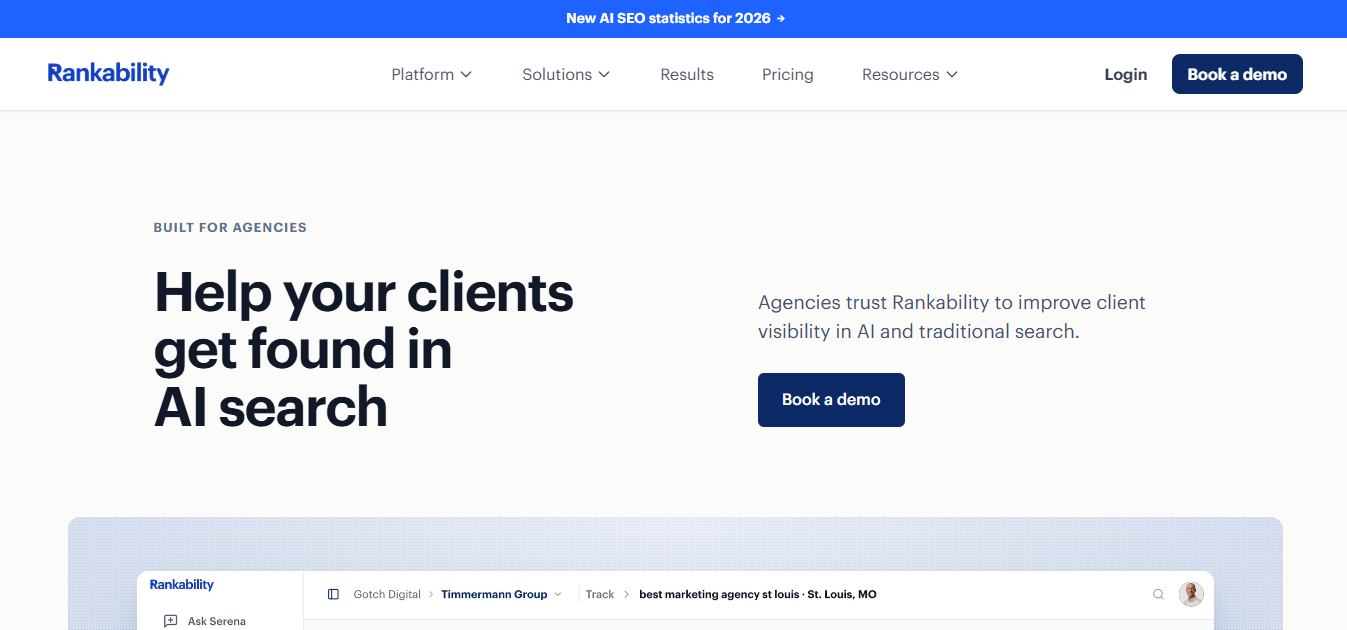
Rankability is one of the more agency-oriented tools in this list. It combines traditional content optimization and scoring with AI-search monitoring and reporting, so teams can look at both conventional search performance and newer visibility signals from the same workflow.
The AI-search side should still be treated carefully. Monitoring visibility is useful, but no platform can guarantee that a page will be cited by ChatGPT, Gemini, Perplexity, or an AI Overview. Plans start at roughly $149 per month, and packaging in this category changes quickly enough that current inclusions are worth checking before purchase.
Agencies managing multiple clients are the clearest audience, particularly if they want optimization, reporting, and AI-search monitoring in one place.
10. WriterZen – Best for Keyword Clustering and Content Planning
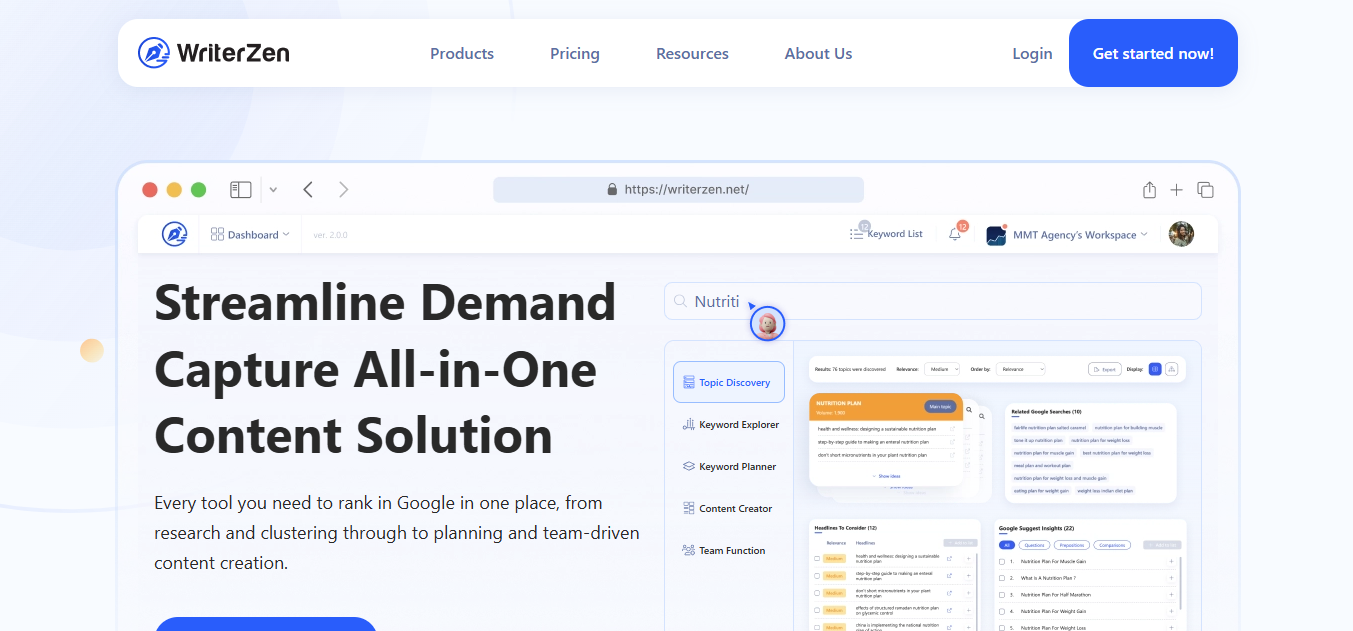
WriterZen helps turn keyword research into a structured content plan. It combines keyword discovery, keyword clustering, topic research, content briefs, and AI-assisted writing, making it useful for planning content before moving into the drafting stage.
Its strongest feature is keyword clustering, which helps group related search terms and identify broader content opportunities. It also includes content analysis, competitor research, NLP insights, and AI writing features.
It is better suited to SEOs and content marketers who want a research and planning-focused workflow than teams looking for a highly advanced page-level content optimizer.
11. SE Ranking – Best for All-in-One Platform Users
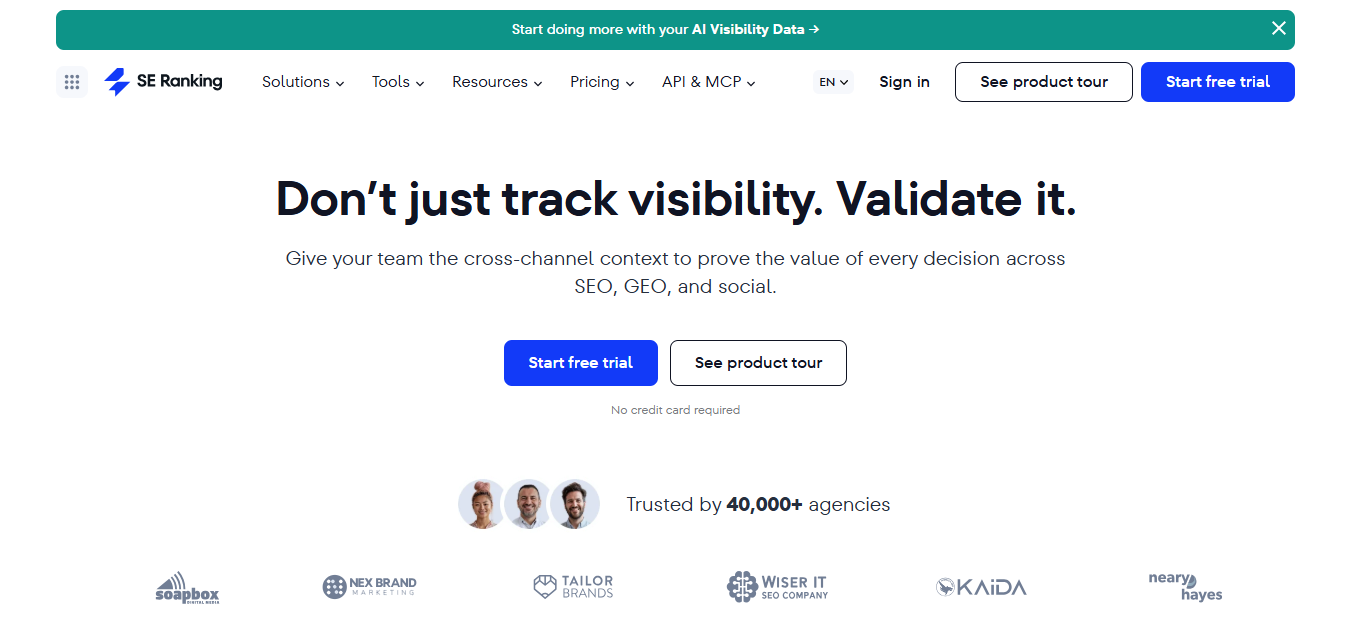
SE Ranking includes content optimization as part of a broader SEO platform rather than treating it as the main product. That means teams can keep content work beside rank tracking, site audits, and white-label reporting instead of paying for a separate specialist tool.
The content module is not as deep as Surfer or Clearscope, and lower-tier article allowances can become restrictive if you publish heavily. Its AI Search features are also priced separately. Plans start at roughly $103 per month on annual billing, with higher month-to-month pricing.
It works well for agencies and in-house teams that prefer one SEO platform and need solid content optimization without the deepest specialist features.
Compare the Best SEO Content Optimization Tools
| Tool | Best For | Core Strength | Standout Feature | Indicative Price |
|---|---|---|---|---|
| Surfer SEO | All-around optimization | SERP-driven optimization | Real-time content score | From ~$79/mo annually |
| Clearscope | Editorial teams | Semantic relevance | Clean grading reports | From ~$129/mo |
| Frase | Research & briefs | Research-to-content flow | SERP-to-brief workflow | From ~$39/mo annually |
| MarketMuse | Topical authority | Content strategy | Site-wide topic modeling | Free plan; paid custom |
| NeuronWriter | Budget-conscious users | NLP optimization | Google Search Console sync | From ~$23/mo |
| Semrush Content Toolkit | SEO teams | Content + SEO ecosystem | Connected to broader SEO data | Part of Semrush (~$139/mo) |
| Scalenut | AI-assisted workflows | Creation + optimization | Topic-to-draft workflow | From ~$39/mo |
| Dashword | Simple optimization | Briefs + optimization | Low learning curve | From ~$99/mo |
| Rankability | Agencies & AI search | SEO/AEO workflows | Agency reporting | From ~$149/mo |
| WriterZen | SEOs & content marketers | Keyword clustering & content planning | Research-to-content workflow | From ~$19/mo* |
| SE Ranking | All-in-one users | Bundled content + SEO suite | Content module inside SEO platform | From ~$103/mo annually |
Pricing is indicative and can change. Verify current plans, limits, and AI-search features on each provider’s site before purchasing.
How to Choose the Right Content Optimization Tool
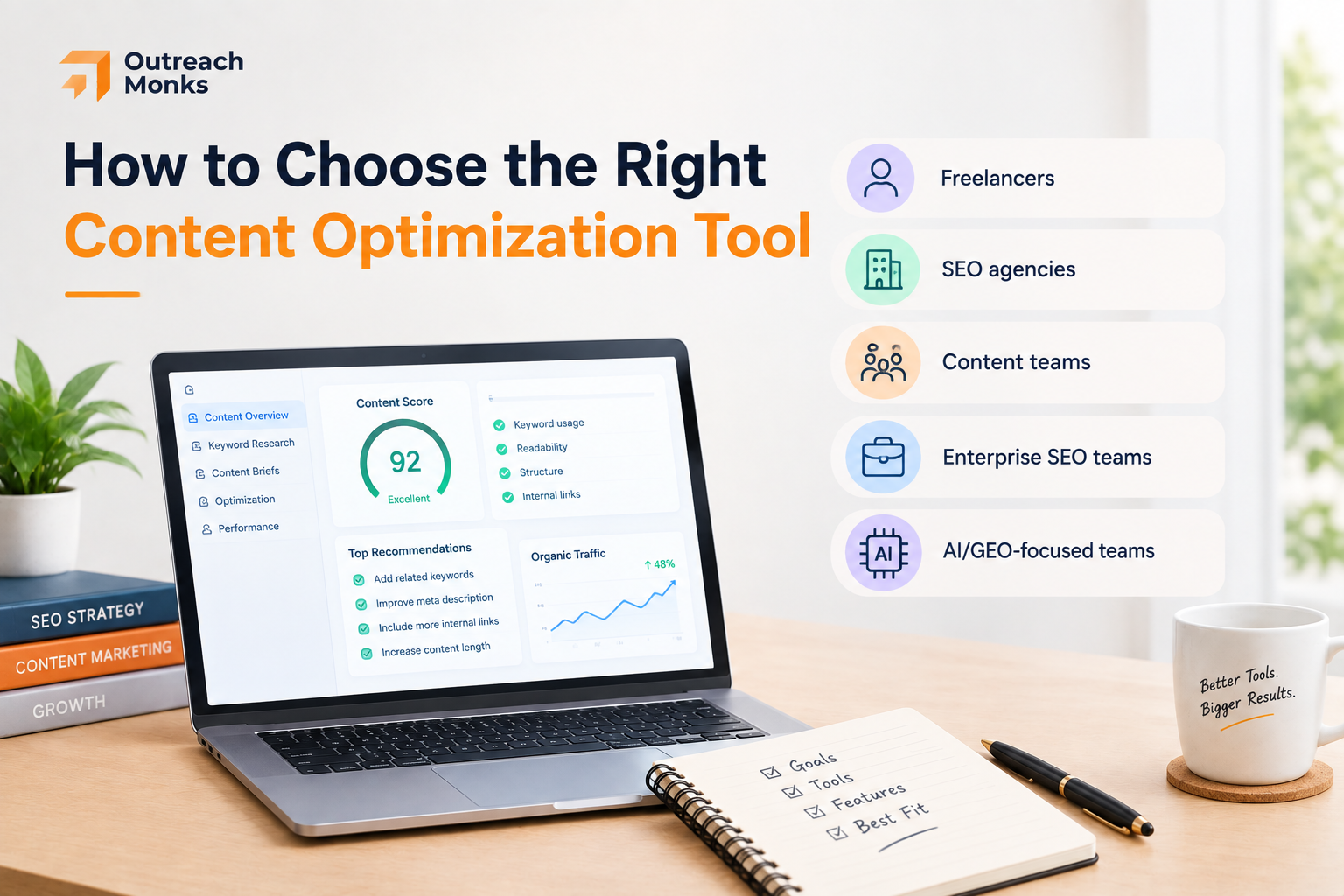
The right tool depends more on your workflow than on the length of its feature list. A simple optimizer can be a better fit than an enterprise platform if the team only needs briefs, coverage guidance, and refresh checks.
- Freelancers: Prioritize ease of use, briefs, content scoring, affordability, and light AI assistance.
- SEO agencies: Prioritize multiple projects, client-ready reporting, collaboration, repeatable standards, audits, and scalability.
- Content teams: Prioritize editorial workflow, briefs, collaboration, consistent standards, and publishing integrations.
- Enterprise SEO teams: Prioritize content inventory, topic modeling, governance, site-wide analysis, integrations, and APIs.
- AI/GEO-focused teams: Prioritize entity/topic coverage, AI-search monitoring, citation/visibility tracking, and integration with traditional SEO workflows.
How to Get Better Results From Content Optimization Tools
Optimization works best as a second-pass discipline, not as a substitute for research, expertise, or editing. Use the tool to identify gaps, then decide which recommendations actually make the page more useful.
- Start with keyword and search-intent research. A perfectly optimized page for the wrong intent still fails.
- Build the brief from SERP patterns, common subtopics, questions, and entities – but do not let the competitor set become the entire outline.
- Draft for the reader first, using real expertise, examples, and a clear point of view.
- Use the optimization score as a coverage check. Add only what improves completeness or clarity.
- Add meaningful internal links so the page strengthens a larger topic cluster instead of existing in isolation.
- Revisit published pages periodically as competitors, products, pricing, and search behavior change.
Do Not Optimize for the Score Alone
A content score can tell you whether your draft covers terms, topics, and structural patterns that appear across ranking pages. It cannot tell you whether the article is accurate, original, genuinely useful, or better than what already exists. Treat the score as a guardrail: use it to catch obvious gaps, then edit for the reader.
Page-Level Optimization vs. Site-Level Authority
Page-level optimization improves one article for a target query. Site-level authority comes from building a connected body of useful content around a subject, filling gaps, and linking related pages together. Tools such as MarketMuse focus more heavily on the second problem, while most editors in this list are strongest at the first.
SEO Content Optimization vs. AI Content Generation
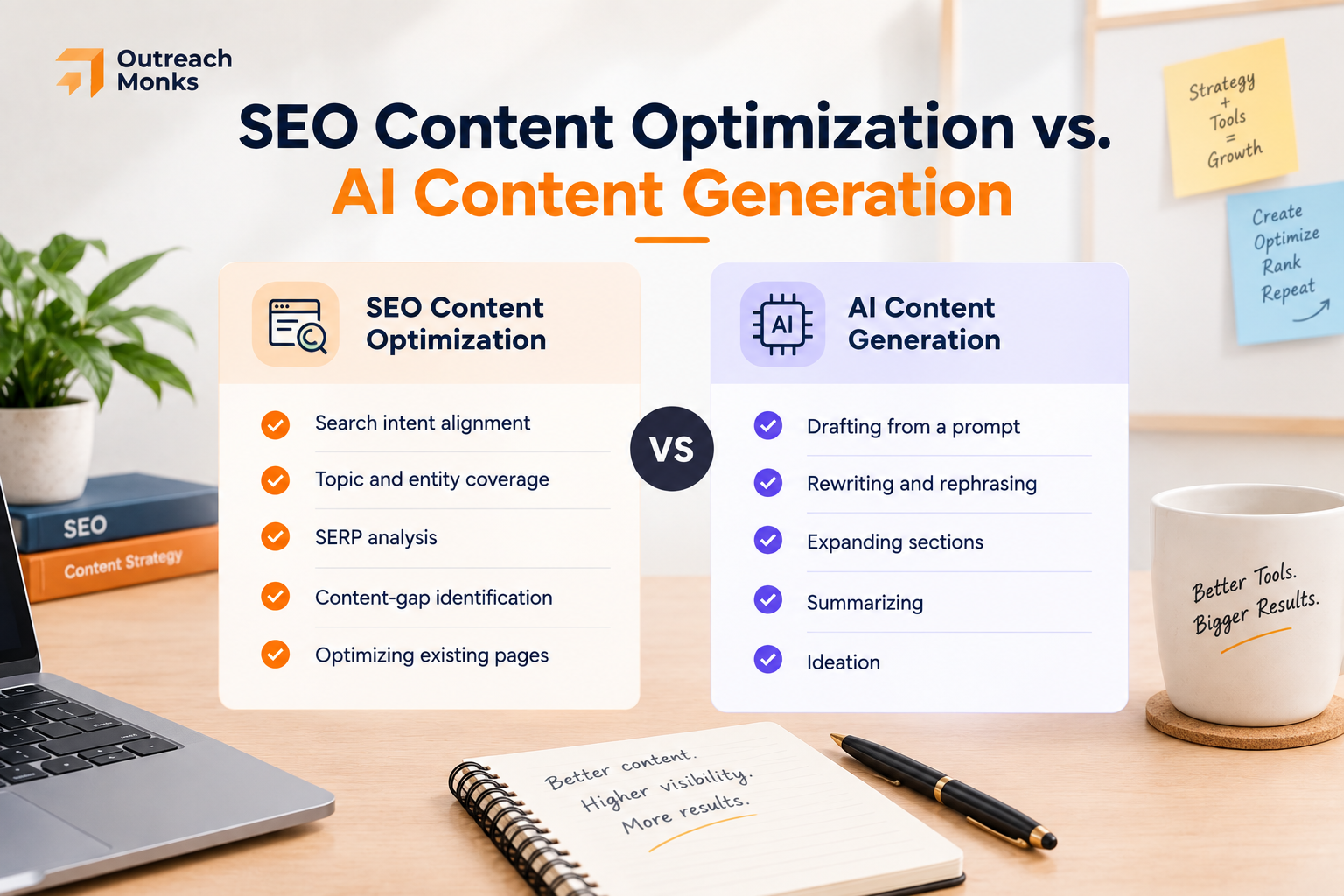
The two categories overlap, but they solve different jobs.
| Content Optimization Tools | AI Writing Tools |
|---|---|
| Search intent alignment | Drafting from a prompt |
| Topic and entity coverage | Rewriting and rephrasing |
| SERP analysis | Expanding sections |
| Content-gap identification | Summarizing |
| Optimizing existing pages | Ideation |
AI-generated content still needs human review, original insight, factual verification, and editing. A higher optimization score does not guarantee rankings, and conventional SEO scoring does not guarantee visibility or citations in AI answers.
Where Content Optimization Ends and Authority Begins
Content optimization improves relevance, coverage, and structure, but rankings also depend on broader signals such as competition, technical SEO, links, and authority. Two pages can be similarly optimized and still perform very differently if one site has stronger external authority.
That is where off-page SEO becomes relevant. If your on-page content is already strong, the next step is to earn relevant backlinks and brand mentions through legitimate outreach. Outreach Monks focuses on this off-page layer through manual outreach to relevant websites rather than PBNs or link farms.
Frequently Asked Questions
What is an SEO content optimization tool?
It is software that analyzes content against search results, topics, terms, entities, and other SEO data to identify specific ways to improve how well a page satisfies a target query. Most platforms analyze competing pages and recommend what to add, remove, or restructure.
What are the best SEO content optimization tools in 2026?
The best fit depends on the workflow. Surfer and Clearscope are strong for page-level optimization; Frase and Scalenut for research-to-draft workflows; MarketMuse for site-wide topical planning; NeuronWriter and Dashword for value or simplicity; Semrush and SE Ranking for teams that prefer bundled SEO suites; and Rankability for agency workflows that include AI-search monitoring.
Do content optimization tools improve Google rankings?
They can help identify and act on optimization opportunities, but no tool guarantees rankings. Performance also depends on relevance, content quality, competition, technical SEO, links, authority, and search intent.
What is the difference between content optimization and content generation?
Generation creates a draft. Optimization improves an existing or in-progress draft so it better satisfies users and search requirements. Many platforms do both, but rarely with equal depth.
Can these tools help build topical authority?
Some can. MarketMuse is the clearest example in this list because it emphasizes content gaps, clusters, and site-wide planning. Other tools focus mainly on individual pages.
Can content optimization tools help with AI-search visibility?
Indirectly. Strong content quality and topic coverage can support visibility across search surfaces, but conventional SEO optimization is not the same as monitoring or guaranteeing citations in AI Overviews, ChatGPT, Gemini, or Perplexity. Check what each product actually tracks.
Can content optimization scores be gamed with keyword stuffing?
To a point, yes. A score can be pushed upward by increasing term coverage, even when the result becomes repetitive. Use the score to catch gaps, not as a target to maximize.
Is a bundled tool as good as a specialist optimizer?
Bundled tools are often enough for teams that need briefs, basic term coverage, and readability checks inside a broader SEO suite. High-volume programs or highly competitive SERPs may benefit from the depth of a specialist optimizer.