
Running SEO for one site is a manageable problem. Running it for fifteen clients at once is a different job entirely.
You are auditing sites you did not build, tracking keywords across industries you did not choose, and explaining every month why a number moved. The tools that make that possible are not always the ones with the best feature lists – they are the ones that hold up when you multiply them by your client count, and that produce something a client will actually read.
This guide covers the twelve tools we consider worth paying for in 2026, what each one costs, and where each one stops being useful. Two of them cover a category that did not meaningfully exist in agency stacks eighteen months ago: tracking whether your clients get mentioned inside AI answers. If your stack has no answer to that, you have a gap a client will find before you do.
Quick answer
For most agencies, the core stack is Semrush or Ahrefs for research, Screaming Frog for technical audits, AgencyAnalytics for client reporting, and one AI visibility tool. Expect to spend $300–$600 a month at small scale and $1,500+ once you pass roughly twenty clients.
If you want the short version by job:
- All-in-one research – Semrush (best value at higher usage), Ahrefs (easier to use), SE Ranking (cheapest of the three)
- Technical audits – Screaming Frog, with Sitebulb if you need client-ready reports
- Client reporting – AgencyAnalytics, white-labelled from the entry plan
- Rank tracking at scale – AccuRanker
- Content – Surfer SEO
- Local SEO – BrightLocal
- AI visibility – Peec AI, or Semrush’s built-in AI tracking if you are already paying for it
- Link building outreach – Pitchbox
- Ground truth, free – Google Search Console
The rest of this guide is the reasoning behind those picks, with pricing and the honest limitations of each.
What separates an agency tool from a good SEO tool
Plenty of excellent SEO tools fall apart the moment you point them at twenty clients. These are the traits that decide whether something earns a slot in an agency stack.
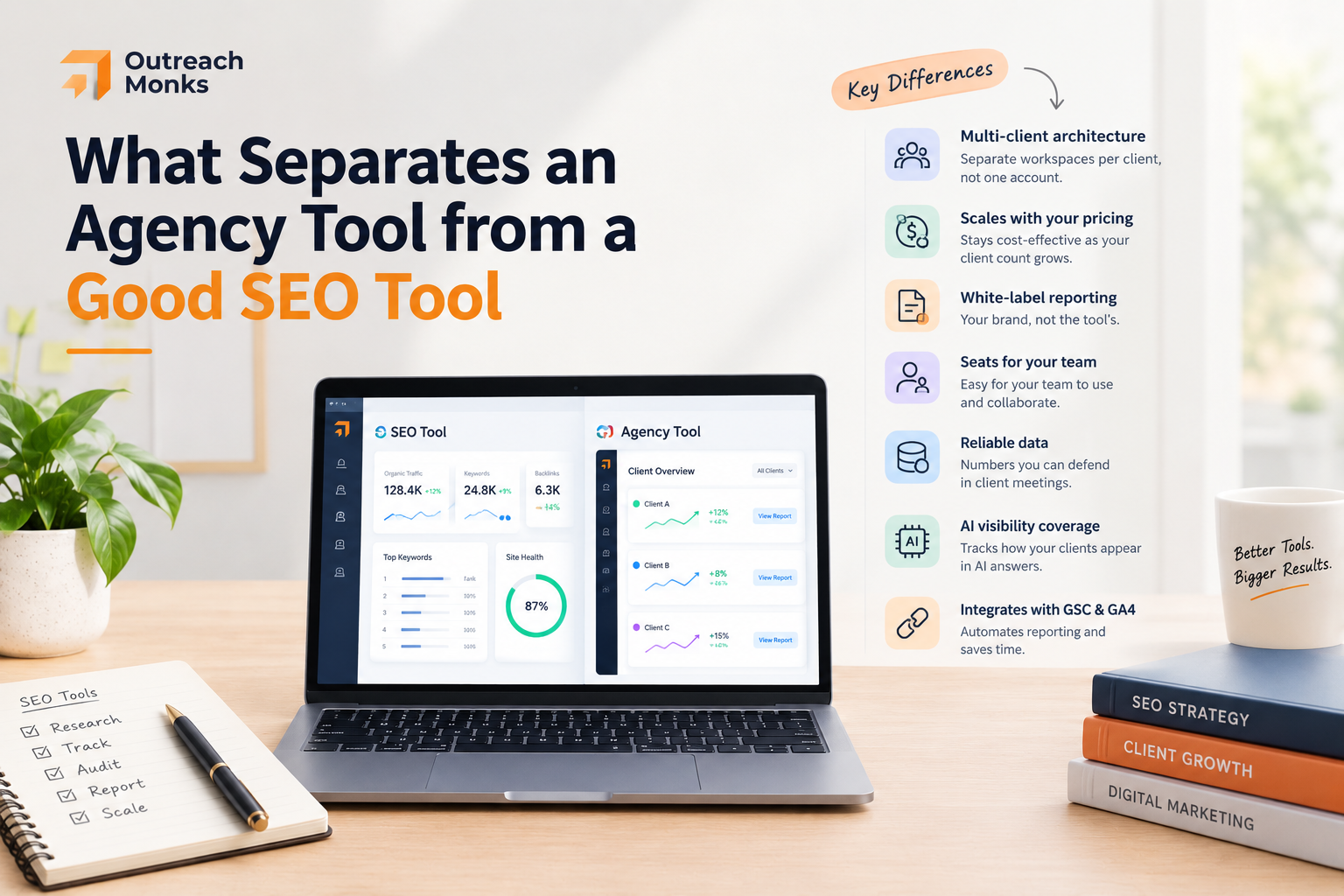
Multi-client architecture. Separate workspaces per client, not one account you keep re-filtering. This sounds obvious until you are three clients deep in a tool that assumes you own one website.
Pricing that survives growth. Some tools charge per client, some per keyword, some per seat. A tool that looks cheap at five clients can be the most expensive line on your bill at thirty. Always model the cost at the client count you expect in a year, not the one you have now.
White-label reporting. Clients should see your brand. If branded reports are locked behind an enterprise tier, factor that into the real cost.
Seats your team can actually use. Most platforms include one user and charge for the rest – often $40 to $80 a month each. A five-person team can double a subscription cost this way.
Data you can defend. Every third-party tool estimates traffic and search volume. You will eventually be in a meeting where a client’s Search Console numbers disagree with your report. Know which of your numbers are estimates and be upfront about it before that meeting, not during it.
AI visibility coverage. New to this list in 2026, and the one most stacks are still missing. Clients are already asking why a competitor shows up when they ask ChatGPT for recommendations in their category. “We don’t track that” is not an answer that survives a renewal conversation.
Integration with GSC and GA4. Any tool that cannot pull from Search Console and Analytics adds manual work to every reporting cycle.
The 12 tools Compared
Prices are entry-level monthly rates as listed in September 2026. Most vendors discount 10–30% for annual billing.
| Tool | Best For | From | White-label | Free Option |
|---|---|---|---|---|
| Semrush | All-in-one research at scale | $139/mo | Via add-on reports | 7-day trial |
| Ahrefs | Backlink data, ease of use | $129/mo (Starter $29) | No | Free tier |
| SE Ranking | Budget all-in-one | ~$52/mo – verify | Yes | 14-day trial |
| Screaming Frog | Deep technical crawls | £199/yr | No | 500 URLs free |
| Sitebulb | Client-ready audit reports | Cloud from £95/mo | Branded PDFs | 14-day trial |
| AgencyAnalytics | Client reporting | $20/client/mo | Yes, included | 14-day trial |
| Surfer SEO | Content optimization | $49/mo | Enterprise only | Free plan |
| AccuRanker | High-volume rank tracking | $224/mo | Not listed | Demo |
| BrightLocal | Local SEO | Price on request | Yes, all tiers | 14-day trial |
| Google Search Console | Ground-truth data | Free | No | Always free |
| Peec AI | AI visibility tracking | Agency plans on request | Looker Studio | Trial available |
| Pitchbox | Link building outreach | $300/mo | Workspaces | Demo |
Two verification notes for the editor. SE Ranking’s pricing page rate-limited automated access, and third-party trackers disagree – some list plans from $52, others quote around $103 for the entry tier. Check the live page before publishing. Peec AI no longer displays prices on its main pricing page and points agencies to a separate agency plan page; earlier public listings put entry plans in the €85–€89 range. BrightLocal has also moved to “price on request” for its three platform tiers, though its own meta description still cites $39.
A note on how to read this table: the “from” column is the cheapest door into each tool, not what an agency will actually pay. The stack costings later in this guide are the realistic numbers.
The 12 best agency SEO tools, reviewed
These are grouped by the job they do, not ranked one to twelve. The best tool for a three-client agency is rarely the best tool for a thirty-client one.
1. Semrush – the widest toolkit, now an Adobe product
Semrush remains the most complete single platform in SEO: keyword research, competitor analysis, technical audits, position tracking, content tools and AI visibility tracking under one login.
The 2026 change you need to know about. Adobe completed its acquisition of Semrush in April 2026, in an all-cash deal valued at roughly $1.9 billion. Adobe has positioned Semrush as the brand visibility layer inside its wider customer experience stack, with an emphasis on SEO, generative engine optimization and agentic search.
For agencies, the practical read is this. Semrush is not going anywhere, and the AI visibility investment is real – tracking daily AI prompts is now built into the standard plans rather than sold as a separate product. But Adobe is an enterprise company, and acquisitions tend to pull roadmaps toward enterprise buyers over time. Some practitioners have said publicly that the acquisition gives them pause about recommending it long term. We would not switch away on that basis, but if you are signing an annual contract, it is worth knowing.
Pricing. The SEO plan starts at $139/month, Starter at $199, Pro+ at $299 and Advanced at $549, with annual billing cutting roughly 15–20%. Additional users start at $45/month. Seven-day free trial.
Where it wins: breadth, and the usage limits. The Pro+ plan covers 15 websites and 1,500 daily tracked keywords, which comfortably carries a mid-sized client roster in one subscription.
Where it frustrates: the interface. There is a lot of product here, and finding the specific report you want is genuinely harder than it should be. Traffic and volume figures are estimates – cross-check against Search Console before putting them in front of a client.
2. Ahrefs – the one your team will actually enjoy using
Ahrefs is built around backlink and competitive data, with one of the cleanest interfaces in the category.
Our honest take on Ahrefs vs Semrush: Ahrefs has the better UI and UX, and it is meaningfully easier to use. If ease of use is what you are optimizing for – and with a team that needs to onboard quickly, it often should be – Ahrefs wins. Semrush rates slightly lower on usability but stronger on value for money: if you have a large team and need higher usage limits, Semrush gives you more for what you pay. That is the real trade-off, and it is not a close call in either direction once you know which constraint matters more to you.
Pricing. Starter is $29/month for limited access, Lite $129, Standard $249, Advanced $449, and Enterprise $1,499/month on an annual commitment. Extra seats run $40–$80/month depending on tier. There is a genuinely useful free tier.
Ahrefs has also moved into AI search with Brand Radar, which tracks brand mentions across AI answers, starting at $199/month with prompt packages on top.
Where it wins:link data. Site Explorer is the fastest way to understand why a competitor outranks a client, and the referring-domain and anchor-text views are where most link gap analysis starts. When that analysis turns into a target list, the work shifts from software to link building outreach – which is a different problem, covered later in this guide.
Where it frustrates: seat costs add up fast, and the credit system on lower tiers can bite mid-audit.
3. SE Ranking – the value all-in-one
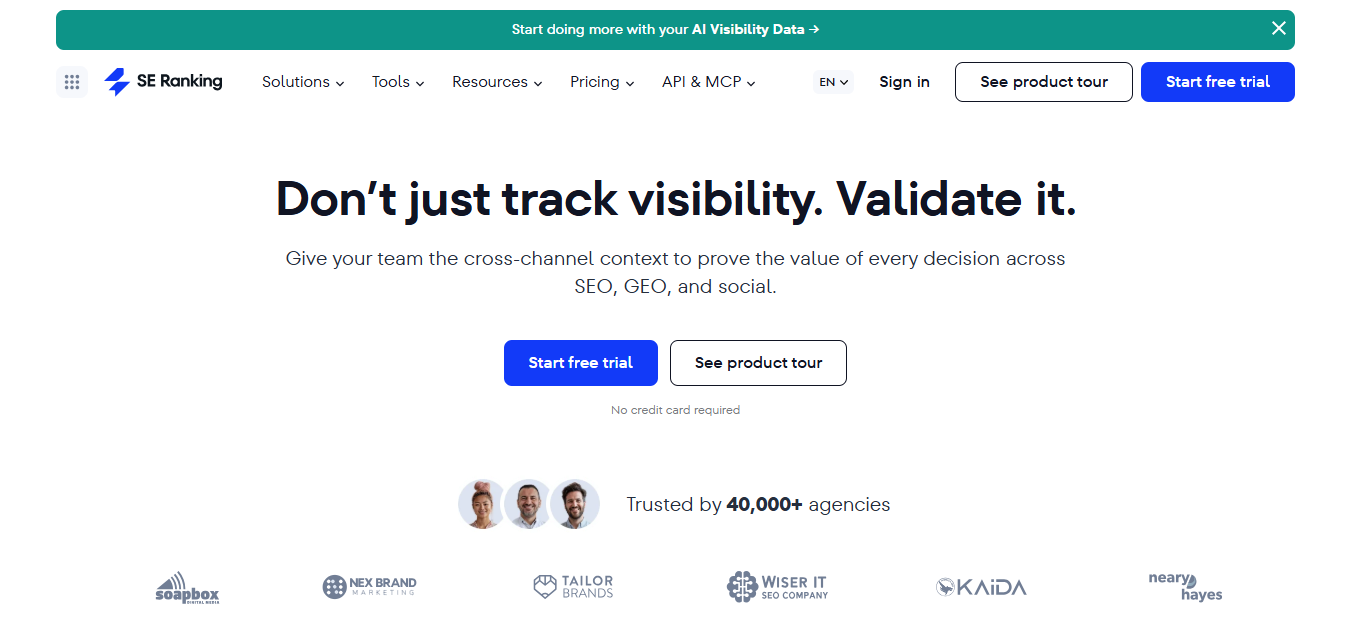
SE Ranking covers most of what Semrush and Ahrefs do – rank tracking, keyword research, site audits, backlink monitoring, white-label reporting – at a noticeably lower price, which makes it the pragmatic pick for agencies serving small and mid-sized clients where the margin on each account is thin.
It has also shipped AI visibility tracking, sometimes sold as SE Visible, giving five-engine coverage and multi-market tracking without a second subscription.
Pricing. Verify the current figure before publishing – see the note under the comparison table. White-label reporting is included, which is the feature that matters most here: at this price point, branded client reports without an upgrade is a real advantage over Ahrefs.
Where it wins: cost per client, and white-label included rather than bolted on.
Where it frustrates: the backlink index is smaller than Ahrefs’, and keyword data is thinner in non-English markets.
4. Screaming Frog – still the technical workhorse
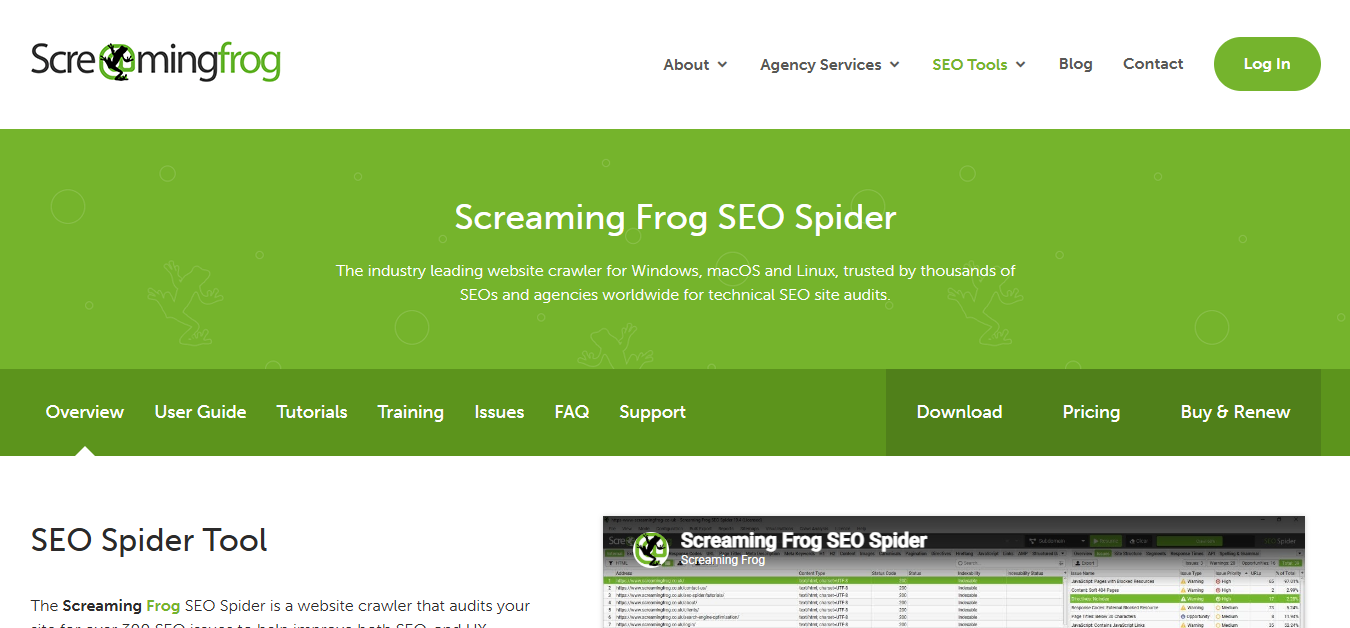
Screaming Frog, a desktop crawler that pulls apart a site’s structure: redirect chains, duplicate titles, broken links, orphan pages, hreflang errors, response codes at scale.
Pricing. £199 per user per year, with volume discounts – £189 each at 5–9 licences, £179 at 10–19, £169 at 20+. The free version crawls up to 500 URLs, which is enough to audit a small brochure site or run a quick pre-pitch check before a prospect call.
Where it wins: nothing else surfaces technical problems this quickly or this completely, and at roughly £17 a month it is the best value in this entire list.
Where it frustrates: the output is a spreadsheet, not a report. It runs locally, so large crawls consume your machine’s memory. Nobody is sending a Screaming Frog export to a client.
5. Sitebulb – audits a client can read
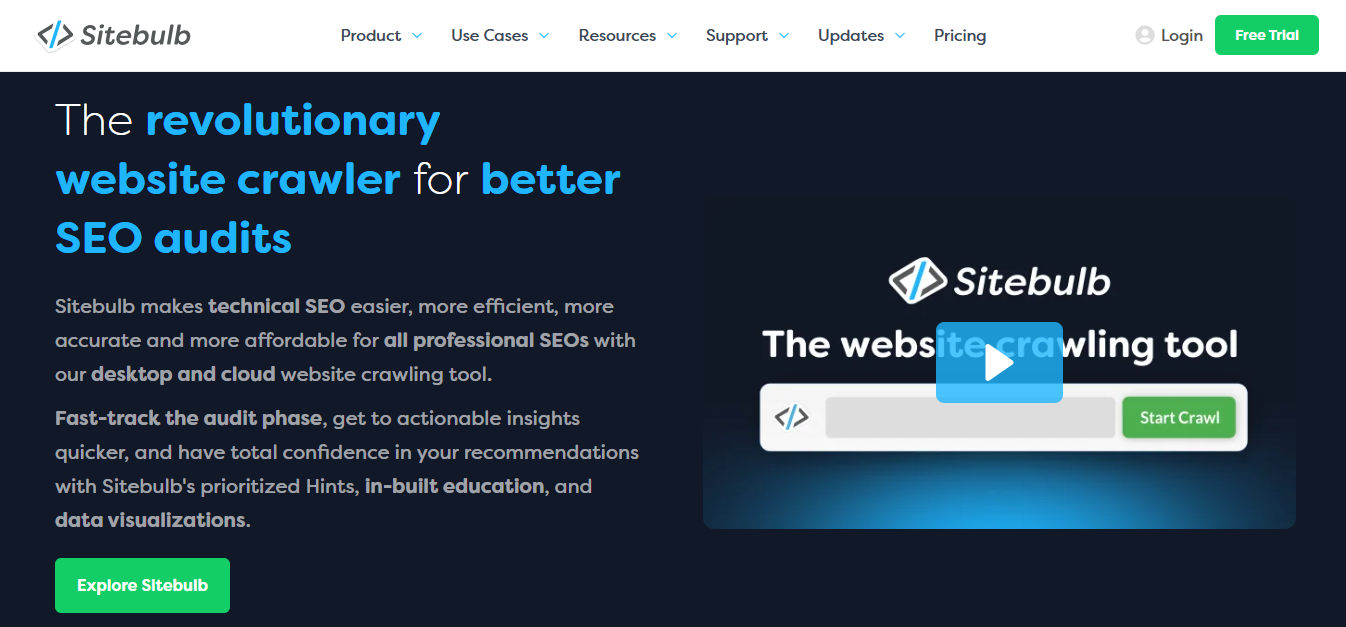
Sitebulb crawls similar ground to Screaming Frog but presents findings as prioritized, explained issues with severity ratings, in a report you can hand over without rewriting it.
Pricing. Desktop tiers run Lite and Pro, with Pro crawling up to 500,000 URLs per audit and additional users at roughly £7/month each. Sitebulb Cloud starts around £95/month for teams. Fourteen-day free trial, no card needed.
Where it wins: it turns a crawl into a deliverable. The explanations attached to each issue also make it a good teaching tool for junior staff.
Where it frustrates: slower than Screaming Frog on large crawls. Many agencies run both – Screaming Frog for digging, Sitebulb for the client-facing version.
6. AgencyAnalytics – the reporting layer
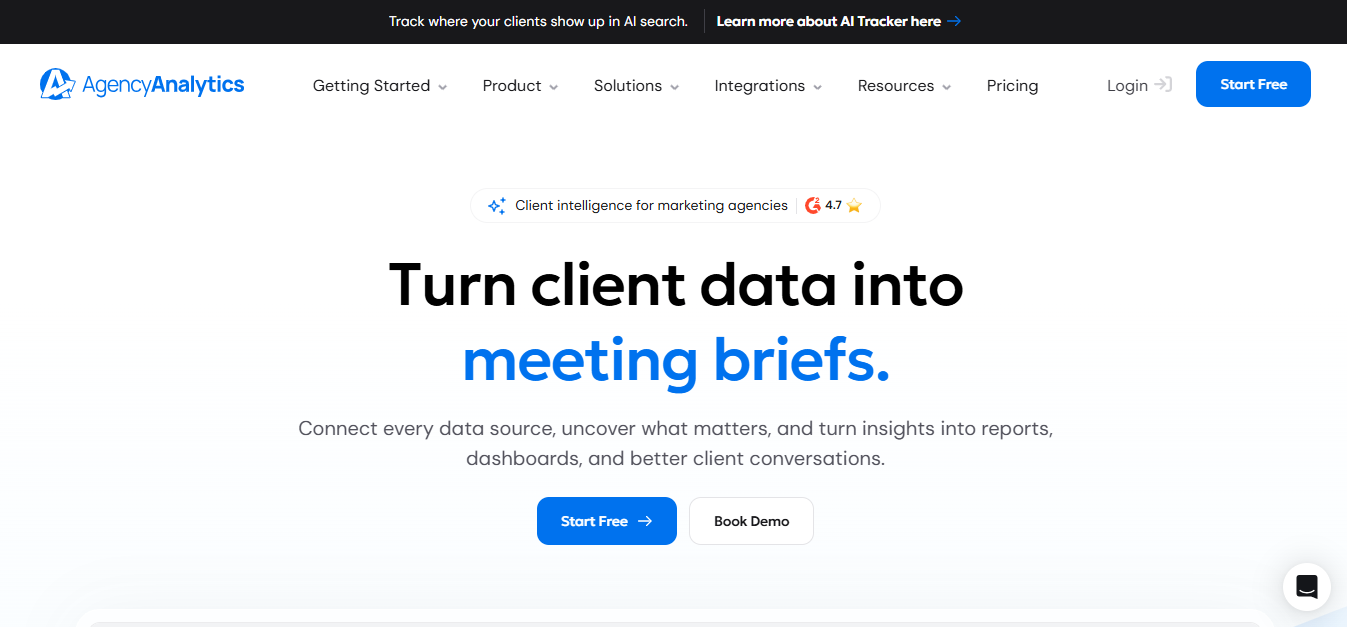
Built specifically for agencies, AgencyAnalytics connects GA4, Search Console, your rank tracker, ads platforms and social accounts into one branded dashboard per client, on your own domain.
Pricing. $20 per client per month billed annually, or $25 monthly, with unlimited staff and client users on every plan. Critically, white-label branding and a custom domain are included from the entry plan rather than gated behind an upgrade. Rank Tracker is a separate add-on at $41.67/month per 500 keywords, and an AI Tracker add-on runs $20.83/month per 250 credits. Fourteen-day free trial, no card. Volume pricing above 25 clients.
Where it wins: it removes the single most tedious recurring task in agency life. Automated monthly reports, branded, scheduled, without anyone assembling slides.
Where it frustrates: the per-client model scales steeply – twenty clients is $400/month before add-ons, forty is $800. Budget for the add-ons too; the headline price is not the real price once you need rank tracking.
7. Surfer SEO – content optimization with an AI layer
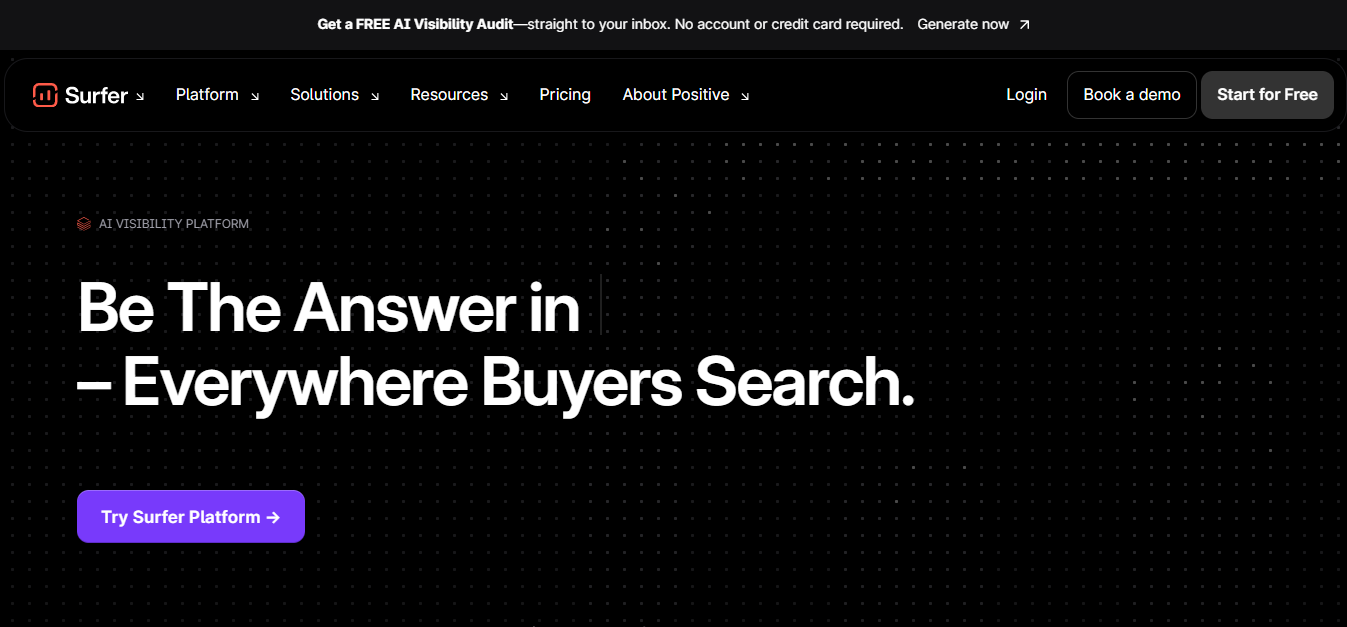
Surfer analyses what is ranking for a term and tells your writers what to cover: terms to include, structure, length, internal linking opportunities.
Pricing. Discovery is $49/month for 120 documents, Standard $99 with three seats, Pro $182 with five seats and 200 tracked pages, Peace of Mind $299 with ten seats. Enterprise runs $999/month and adds white-label options. Surfer also sells a standalone AI Search Analytics plan at $82/month that tracks brand visibility across ChatGPT, Gemini, Perplexity and AI Overviews without the content credits.
Where it wins: it makes briefing consistent. A freelancer who has never worked on the client’s account can hit a defensible standard.
Where it frustrates: writers can optimize for the score instead of the reader. Treat it as a checklist, not a target – the content still has to be worth reading.
8. AccuRanker – rank tracking built for volume
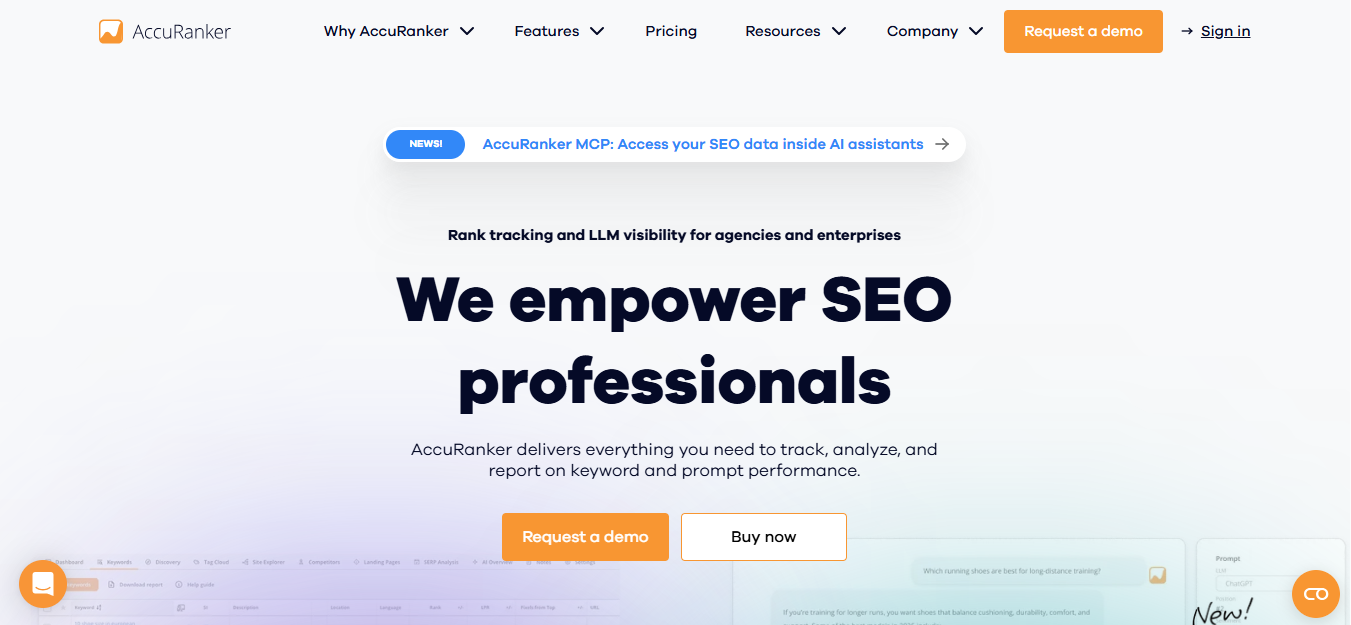
A specialist tool that does one thing: track rankings, fast, accurately, on demand.
Pricing. Professional is $224/month for 2,000–5,000 keywords, Expert $764/month for 10,000–25,000, Enterprise custom above that. Ten percent off annual billing.
Where it wins: speed and accuracy at scale. If rankings are your headline client metric and you track tens of thousands of keywords, the all-in-one trackers start creaking well before AccuRanker does.
Where it frustrates: it is expensive for what it is, and it only tracks rankings. This is a tool you add when your all-in-one platform’s tracking stops keeping up – not a starting purchase.
9. BrightLocal – local SEO and multi-location clients
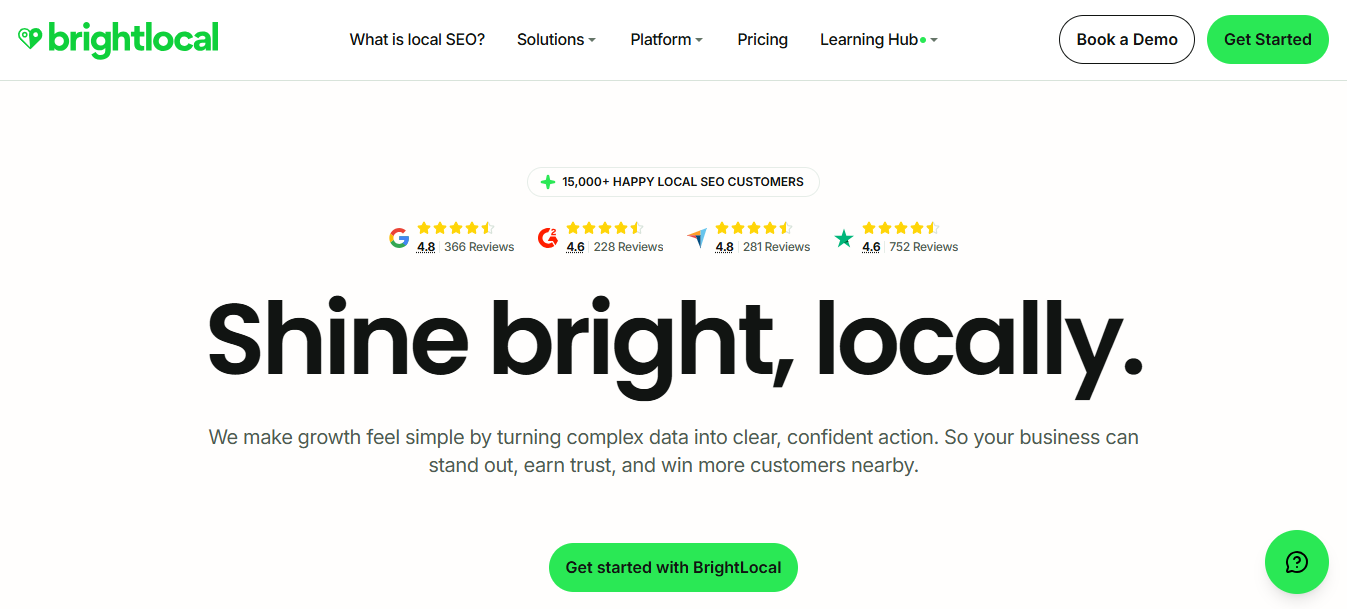
BrightLocal is Purpose-built for local: local rank tracking by postcode, citation building and cleanup, Google Business Profile management, review monitoring.
Pricing. BrightLocal has moved its three platform tiers – Track, Manage and Grow – to price on request, though its own site still references entry pricing around $39/month. White-labelling is available across all three tiers. Citation Builder is pay-as-you-go from about $2 per citation, and a managed SEO service runs $1,299/month. Fourteen-day free trial, no card.
Where it wins: if you serve restaurants, clinics, trades or any multi-location business, generic SEO tools will not show you what BrightLocal shows you.
Where it frustrates: entirely irrelevant if your clients are national or ecommerce. Also, get the exact quote before you build it into a client’s retainer.
10. Google Search Console – the free one that settles arguments
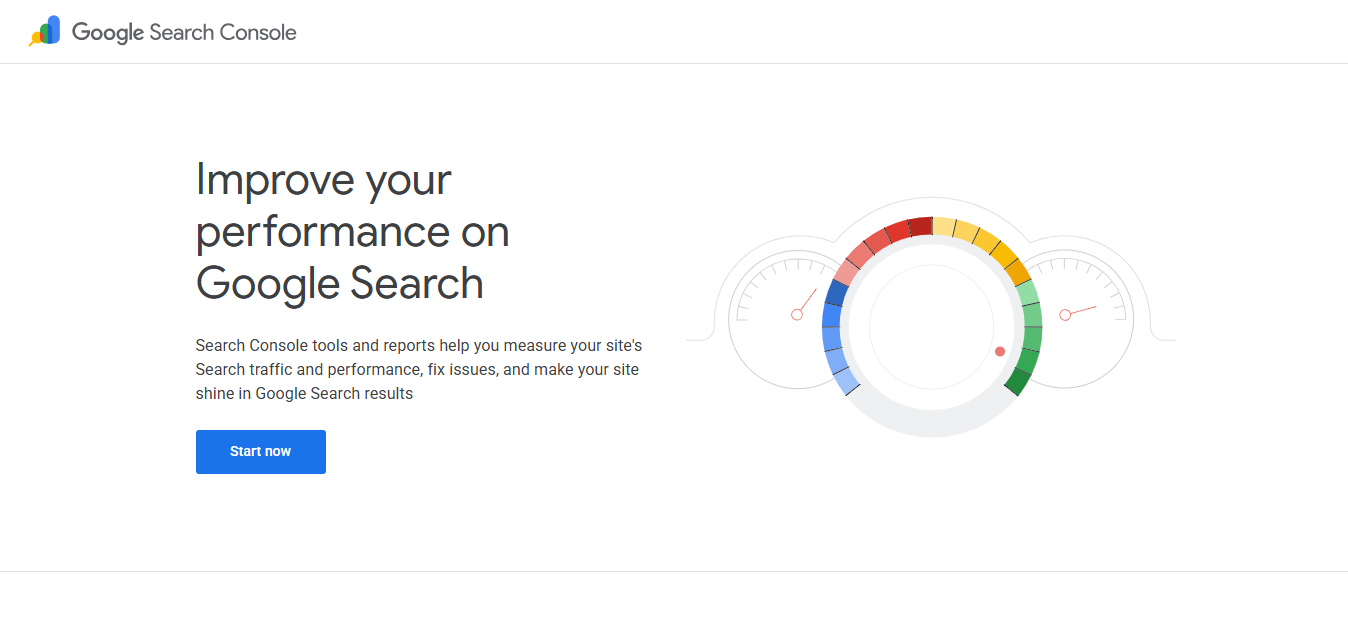
Every other tool on this list estimates. GSC reports what Google actually recorded: impressions, clicks, average position, the queries that triggered them, indexing status and Core Web Vitals.
Pricing. Free, with no change to that in 2026.
Where it wins: it is ground truth. When a client challenges a number, this is the source you quote. Set up access during onboarding for every client, without exception – it is also the fastest way to spot an indexing problem before it becomes a traffic problem.
Where it frustrates:one site at a time, sixteen months of data, no competitor view. Pipe it into AgencyAnalytics or Looker Studio rather than logging in twelve times a month.
11. Peec AI – tracking whether AI mentions your clients
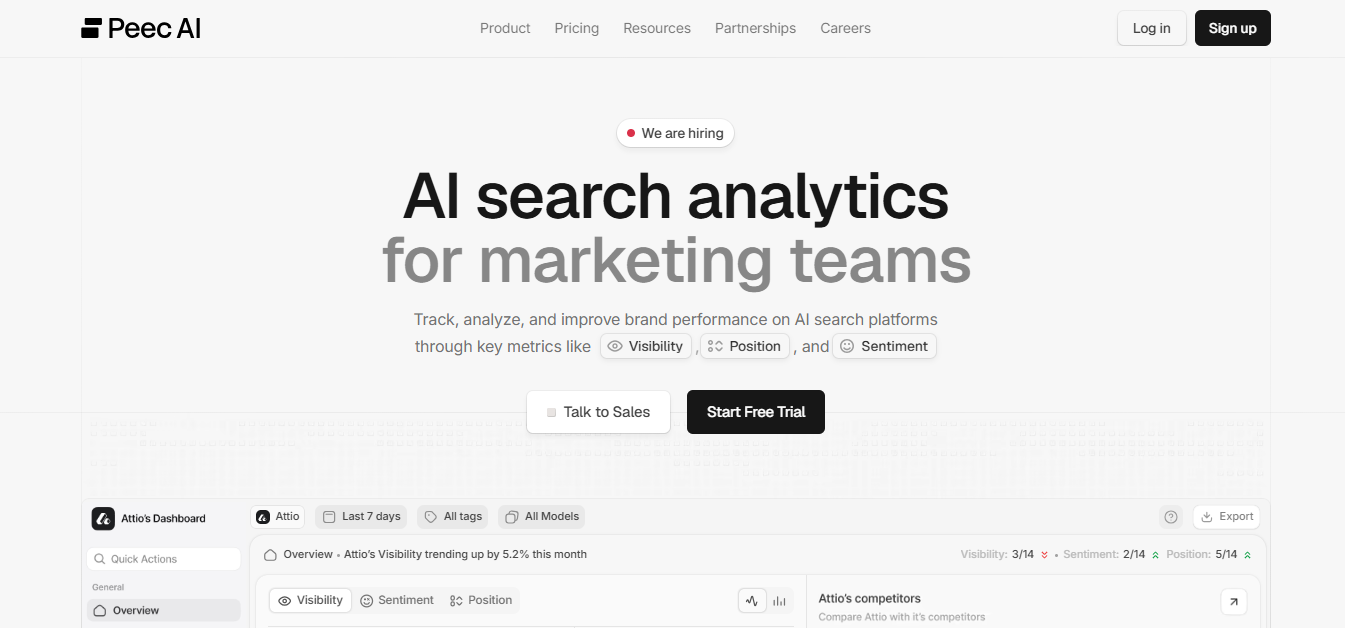
This is the category that did not exist in most agency stacks two years ago and now decides pitches.
AI visibility tools run prompts across ChatGPT, Gemini, Claude, Perplexity, Google AI Overviews and others on a schedule, then report how often a brand is mentioned, in what position, with what sentiment, and which sources the model cited. Peec AI is one of the more agency-friendly options: prompt-based tiers, unlimited users on every plan, multi-project support and a Looker Studio integration that drops AI visibility data into client reporting.
Pricing. Peec has moved prices off its main pricing page and points agencies to a dedicated agency plan. Plans are structured by prompt volume – 50, 150 and 350 prompts across Starter, Pro and Advanced, with unlimited users on all of them and 15% off annual billing. Earlier public listings put entry plans in the €85–€89 range; request a current quote.
The alternatives worth knowing: Semrush and SE Ranking both include AI visibility tracking in their standard plans, which is the cheaper route if you already pay for one. Profound is the enterprise-depth option. Otterly.ai is the budget entry point. If you are not ready to buy anything yet, several vendors offer free AI visibility checkers that will at least tell you where a client stands today.
Where it wins: it answers a question clients are already asking, and it is a straightforward upsell – a new deliverable on an existing retainer.
Where it frustrates: the data is young and the category is noisy. Prompt sets are something you construct, not something that exists objectively, so two tools can report different visibility for the same brand. Be honest with clients about that, and judge tools on which engines they actually cover and how often they refresh.
12. Pitchbox – outreach and link building at scale
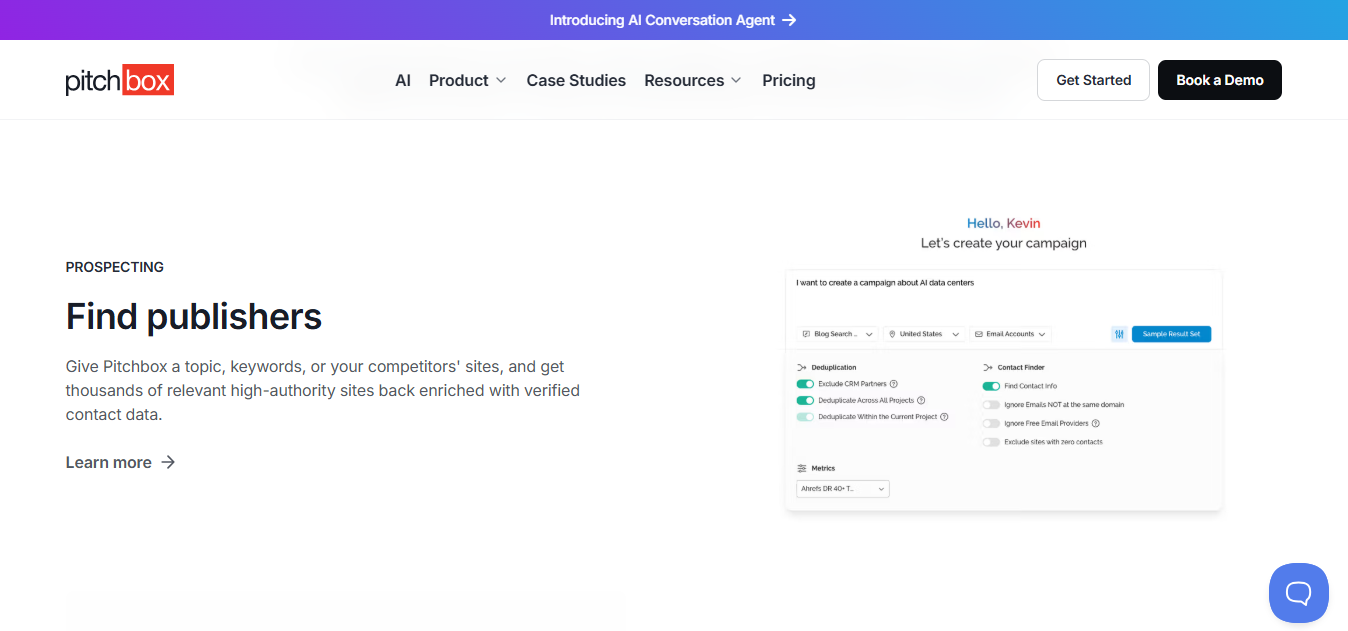
Every tool above finds opportunities. None of them earns a link. Pitchbox is the platform for the part that follows: prospecting, personalized email sequences, follow-ups, and tracking which conversations turned into placements.
Pricing. Pro is $300/month ($210 on annual) with two users and 2,000 emails a month. Advanced is $600/month ($420 annual) and is the agency plan – unlimited users and 25 workspaces, so each client’s outreach stays separate. Scale is $1,200/month ($825 annual). All plans are annual commitments.
The alternatives: BuzzStream is the lighter, cheaper option for small teams; Respona sits between the two with built-in prospecting. We compare the full category in our guide to the best blogger outreach tools.
Where it wins: it makes outreach a measurable process rather than a mailbox. Workspaces per client are what make it work at agency scale.
Where it frustrates: the price is a commitment, and – this is the important part – the software is not the hard part of link building. Which brings us to the next section.
The gap no tool on this list closes
Every tool here does one of two things: it tells you what is happening, or it makes an existing workflow faster. Neither is the same as doing the work.
That gap is widest in link building. Ahrefs will show you the eleven referring domains your client’s competitor has and they don’t. It will not email those sites, negotiate a placement, write something an editor wants to publish, or follow up four times over six weeks. Pitchbox will manage that process – but you still need people running it, and the outcome depends almost entirely on the quality of the relationships and the pitch, not the software.
This is where most agencies quietly lose money. You buy the tool, assign link building to someone already running three other workstreams, and six months later the backlink profile has barely moved while the subscription renews on schedule. The tooling was never the constraint.
There are two honest ways to close it: build a dedicated outreach function – headcount, tooling, and the months it takes to build publisher relationships – or hand that piece to a team that already has it.
We do the second one. Outreach Monks is a link building agency, and it is all we do. Every link is placed through manual outreach by our in-house team – no PBNs, no link farms, no automated blasts – on sites we vet for real traffic, not just Domain Rating. We work white-label for SEO agencies, which means placements land under your brand and the reporting goes to your client with your logo on it. Every link carries a six-month replacement guarantee.
If your stack is solid and the links still aren’t landing, that is the problem worth outsourcing. See how our blogger outreach works.
Three agency stacks and what they actually cost
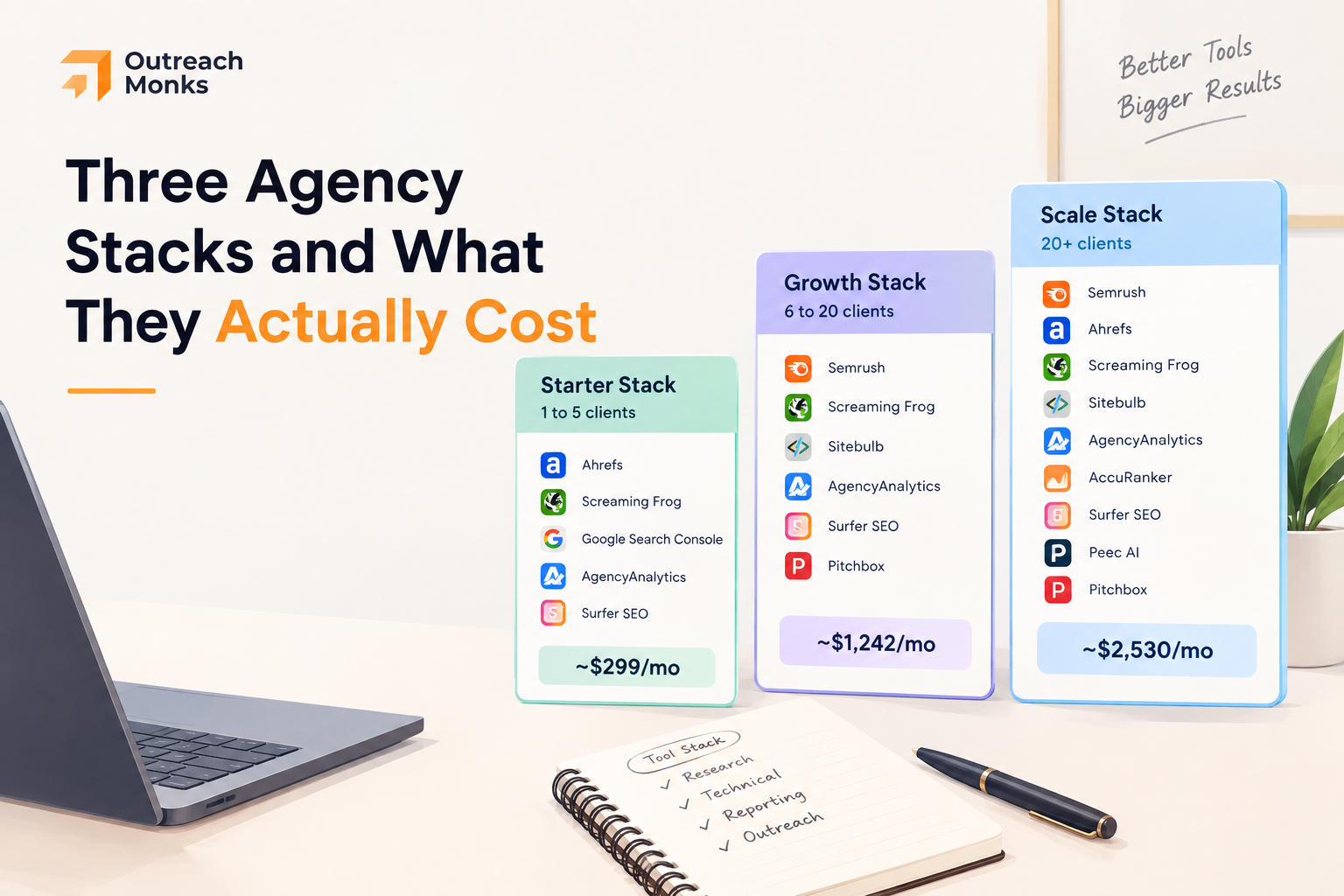
Most roundups list tools and leave you to do the arithmetic. Here is the arithmetic. All figures are monthly, at annual billing where available, as listed in September 2026.
Starter stack – 1 to 5 clients
For a solo consultant or a small team where every subscription has to justify itself.
| Tool | Job | Monthly |
|---|---|---|
| Ahrefs Lite | Research and backlinks | $129 |
| Screaming Frog | Technical audits | ~$21 (£199/yr) |
| Google Search Console | Ground truth | Free |
| AgencyAnalytics (5 clients) | Client reporting | $100 |
| Surfer Discovery | Conteant briefs | $49 |
| Total | – | ~$299/mo |
At this size, skip the dedicated rank tracker and AI visibility tool. Ahrefs covers tracking at this volume, and a free AI visibility checker will tell you where clients stand until the spend is justified.
Growth stack – 6 to 20 clients
The point where manual processes break and multi-client architecture starts to matter.
| Tool | Job | Monthly |
|---|---|---|
| Semrush Pro+ | Research, 15 sites, AI tracking | $248 |
| Screaming Frog × 2 seats | Technical audits | ~$42 |
| Sitebulb Pro | Client-facing audits | ~$50 |
| AgencyAnalytics (15 clients) | Reporting | $300 |
| AgencyAnalytics Rank Tracker | 1,000 keywords | $83 |
| Surfer Standard | Content, 3 seats | $99 |
| Pitchbox Advanced | Outreach, 25 workspaces | $420 |
Semrush’s Pro+ tier earns its place here because 15 websites and 1,500 daily keywords covers this roster in one subscription, and the AI prompt tracking is included rather than bought separately. If ease of use matters more to your team than usage limits, swap in Ahrefs Standard at $249 and add an AI visibility tool.
Scale stack – 20+ clients
| Tool | Job | Monthly |
|---|---|---|
| Semrush Advanced | 40 sites, 5,000 keywords | $456 |
| Ahrefs Standard | Second data source for link work | $249 |
| Screaming Frog × 5 seats | Technical | ~$79 |
| Sitebulb Cloud | Team audits | ~$120 |
| AgencyAnalytics (30 clients) | Reporting | $600 |
| AccuRanker Professional | High-volume tracking | $224 |
| Surfer Pro | Content, 5 seats | $182 |
| Peec AI (agency plan) | AI visibility | ~$200 est. |
| Pitchbox Advanced | Outreach | $420 |
| Total | – | ~$2,530/mo |