
A content calendar is easy to buy. Organic growth is harder. Plenty of brands publish steadily for a year and end up with a flat traffic line because the articles targeted topics few people search for, sat on a site that could not surface them, or never reached anyone beyond the publish button. Google’s own guidance on helpful, people-first content is about usefulness to readers, not output, and with zero-click searches on the rise, a page has to earn its place before it earns a visit.
That is why this list is organised differently from most roundups of content marketing agencies for organic growth. Instead of five “best overall” entries, it picks five agencies for the part of the growth chain each documents most clearly, so you can match a provider to the gap in your own process.
The Three Elements of Content-Driven Organic Growth
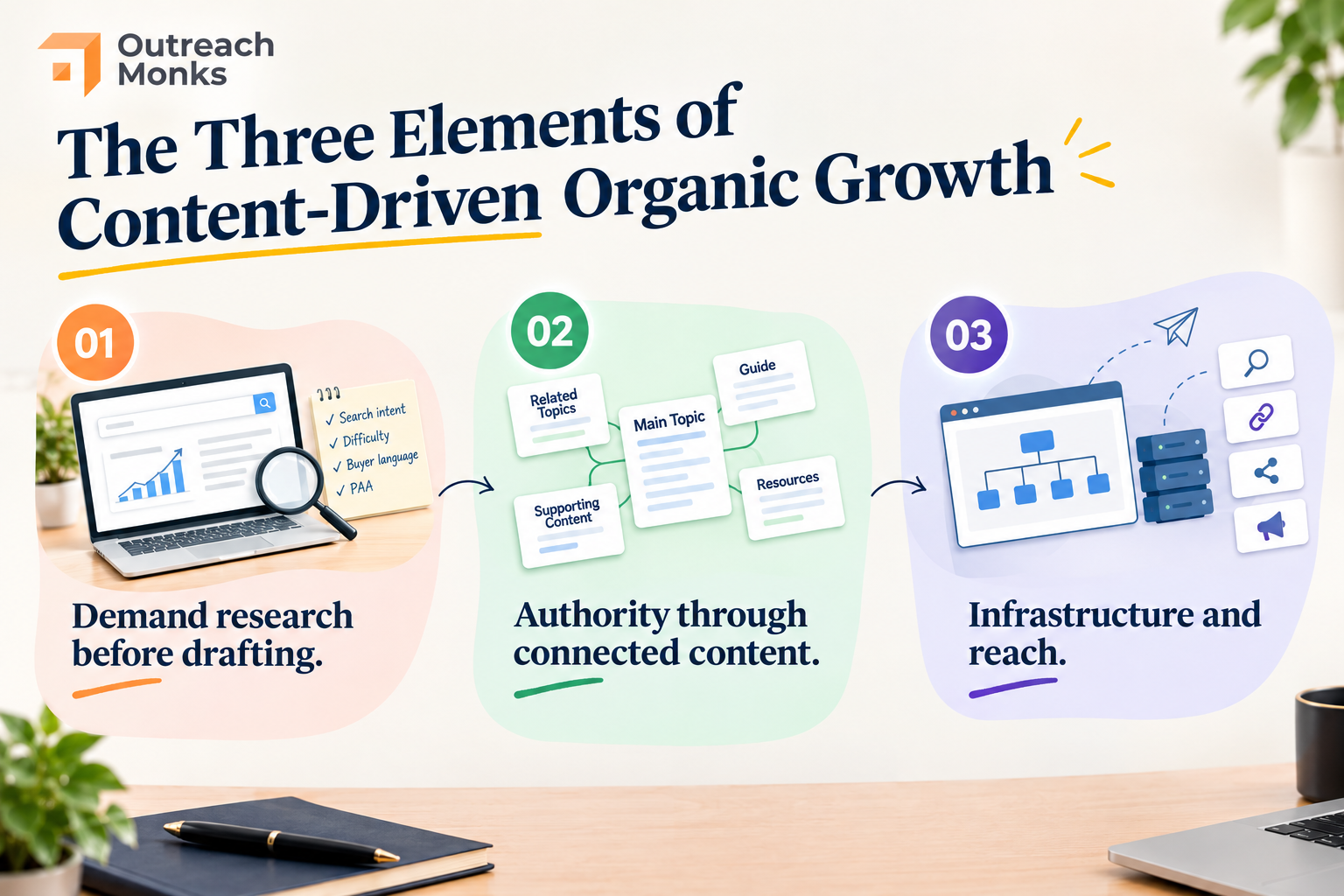
Content turns into organic growth when three things work together. Each agency below is read through this lens.
- Demand research before drafting. Good topics start with how people actually search and talk, not with a guess. That means reading intent, weighing keyword difficulty honestly, and mining signals such as People Also Search For and customer language.
- Authority through connected content. Isolated posts rarely compound. A planned topical map, original assets worth citing, and the mentions and links that follow them are what build trust in a subject.
- Infrastructure and reach. Content needs a site that search engines can crawl efficiently, with sensible crawl budget use and no orphan pages, plus a plan to put it in front of people beyond the publish button.
Few agencies are equally strong at all three, and that is the useful insight. The right agency depends on which link in your chain is weakest.
Five Agencies and Their Distinct Strengths
These five were chosen for a documented strength and a clear audience, not for size or name recognition. Details come from each agency’s own website, read in October 2026, and figures quoted are the agencies’ own claims, not independently audited. Outreach Monks publishes this article and is one of the five, so it is described the same way as the others, from its own published pages. The order follows the chain, not a ranking.
1. Omniscient Digital: Start With the Customer’s Words
Growth chain focus: Demand research
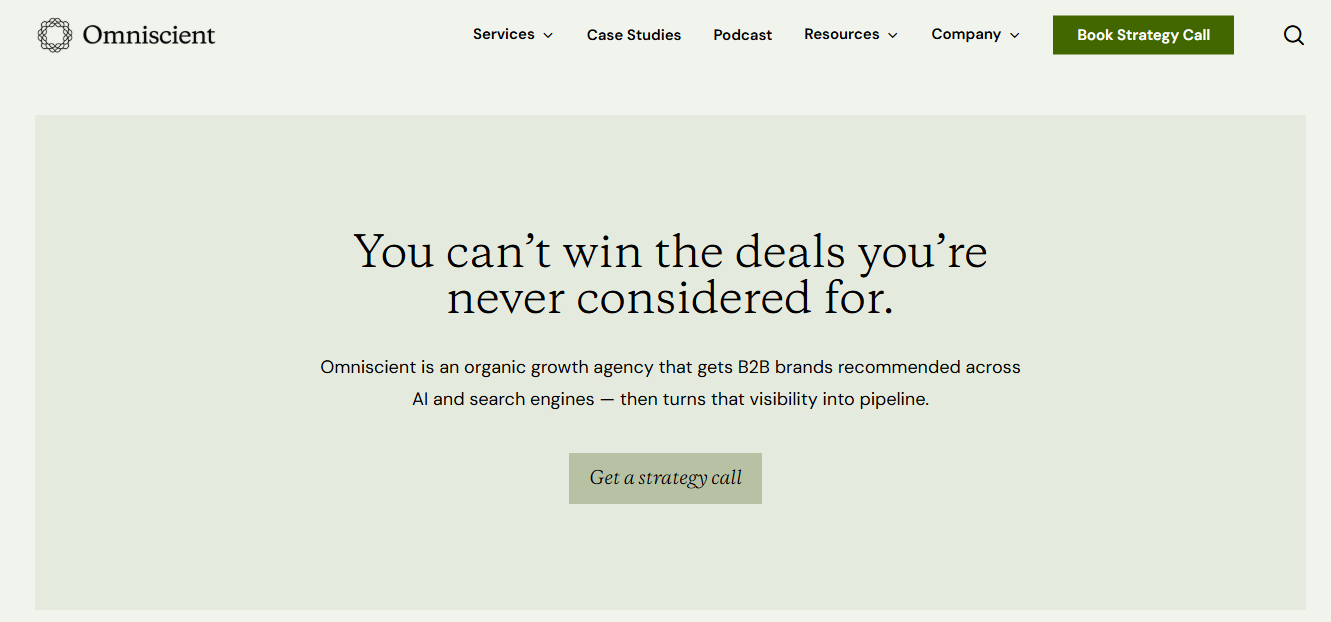
Omniscient Digital describes itself as an organic growth agency for B2B software companies. Its homepage frames the starting point plainly: most organic strategies begin with a keyword export, while its own begins with the customer’s words. In practice, it says that means interviewing sales and customer success teams and reviewing sales calls before topics are chosen, grounding the plan in buyer demand rather than third-party estimates.
Its listed services run from SEO strategy and answer engine optimisation to programmatic and technical SEO, content production, digital PR and link building. Named clients include OnBoard, Convert, Teambridge, Order.co and Jasper, and its published case studies report results in AI visibility, pipeline and blog traffic. Those results are the agency’s own, so they are worth probing on a call.
Best fit: B2B software companies with a sales team to learn from and a pipeline goal.
Worth weighing: It serves B2B software specifically, and its homepage states that full-service engagements start at $120,000 a year, so it suits teams budgeting at that level.
2. Seer Interactive: Research and Measurement Rigor
Growth chain focus: Demand research, plus infrastructure and reach
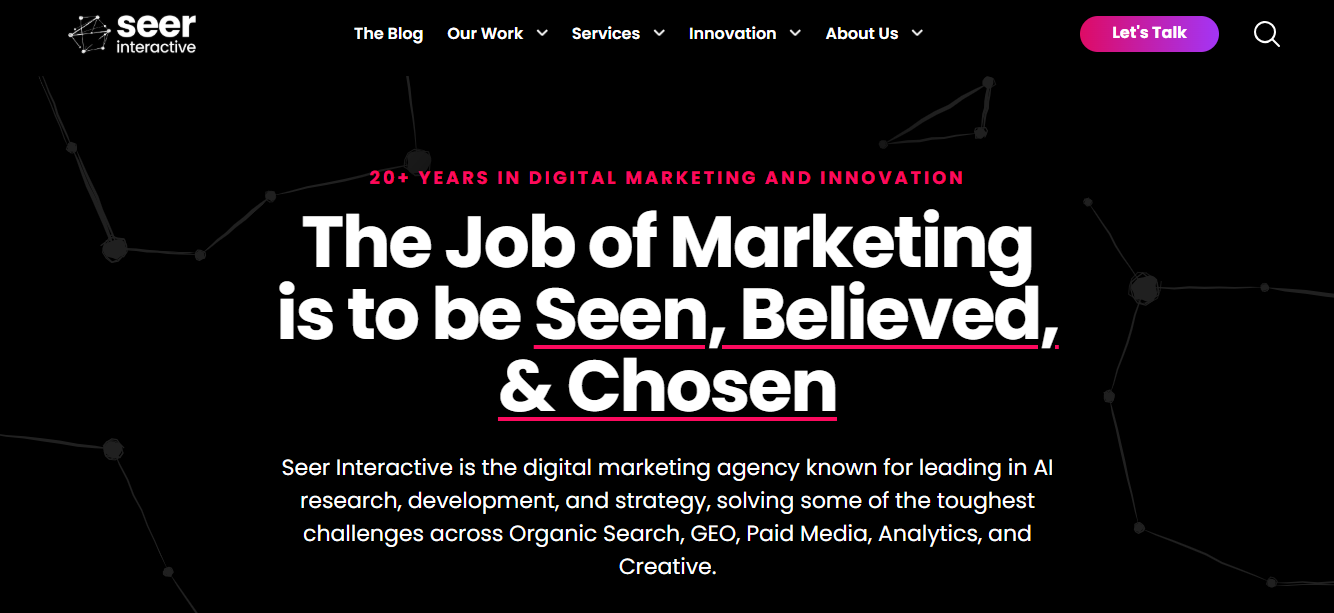
Seer Interactive is a digital marketing agency known for search analytics and AI research. Its SEO service pairs keyword and audience research with technical SEO and content strategy roadmaps, and it puts weight on accountable reporting tied to revenue and conversions, under the line “Grow Your Business, Not Just Your Traffic”. The site cites 130+ enterprise clients and publishes case studies in sectors such as outdoor living, water technology, SaaS and automotive, along with its own AI search studies.
Its pages do not present content production as a standalone service, so it reads as the research, technical and measurement partner for content, not a writing shop. That can be an advantage for teams that already have writers and need the evidence to aim them.
Best fit: Established brands in sectors such as SaaS, healthcare, banking, e-commerce and higher education that want measurement-grade rigor behind their content.
Worth weighing: Engagements are described as flexible consulting retainers with no published pricing, and the enterprise orientation may be more than a small team needs.
3. Outreach Monks: Content and Links Planned Together
Growth chain focus: Demand research, plus authority and assets
Outreach Monks is a link building and AI-first SEO agency, and we are the publisher of this article, so we have described ourselves the same way as the others. Our approach to content marketing is to plan content and authority together. Our SEO packages combine keyword research, blog posts written by our own writers and a fixed monthly volume of backlinks, with content and links chosen to support the same keywords. Every plan also includes AI search visibility work, and our brand mentions service aims to build the entity signals AI systems draw on.
On the content side, AI supports research, structure and briefs while people own quality and expert input, as set out on our page about AI content creation. On the authority side, links come from manual outreach and editorial links on real sites, in line with Google’s spam policies, not from link schemes. That adds an authority layer to a content program, with the caveat that links support content and do not replace it, and nobody can guarantee rankings.
Best fit: SEO-led brands, including SaaS companies, online stores and local businesses, that want content and authority handled by one team on predictable terms.
Worth weighing: Packages run on fixed monthly counts of links, posts and fixes, stated before you pay, from $799 a month on a month-to-month basis, so they suit teams that want predictable scope. Brands that need a larger or bespoke program can ask about the custom plan, which lets you choose the link and content mix.
4. Siege Media: Assets Built to Earn Links and Citations
Growth chain focus: Authority and assets
Siege Media presents content marketing as a single package built around four parts: content strategy, content creation, digital PR and product-led SEO. Its distinguishing feature is research-led, design-heavy assets. It says data journalists produce “content with data”, that design, animation and interactive tools such as calculators and quizzes sit alongside writing, and that people create the work while AI handles routine tasks such as outlines and image editing.
For authority, it cites 5,000+ publisher relationships for digital PR and positions itself today as a generative engine optimization agency. Named case studies include Instacart, Zendesk, The Zebra and Zapier, with traffic value, links and AI visibility figures that are self-reported.
Best fit: Larger brands in SaaS, fintech, e-commerce, health and similar sectors that want link-earning, citation-worthy assets and can fund them.
Worth weighing: Its content marketing minimum is stated as $8,000 a month on a 12-month term with a 30-day out clause, priced through a unit system, so confirm what a unit buys before comparing quotes.
5. Foundation Marketing: Making Sure Content Travels
Growth chain focus: Infrastructure and reach
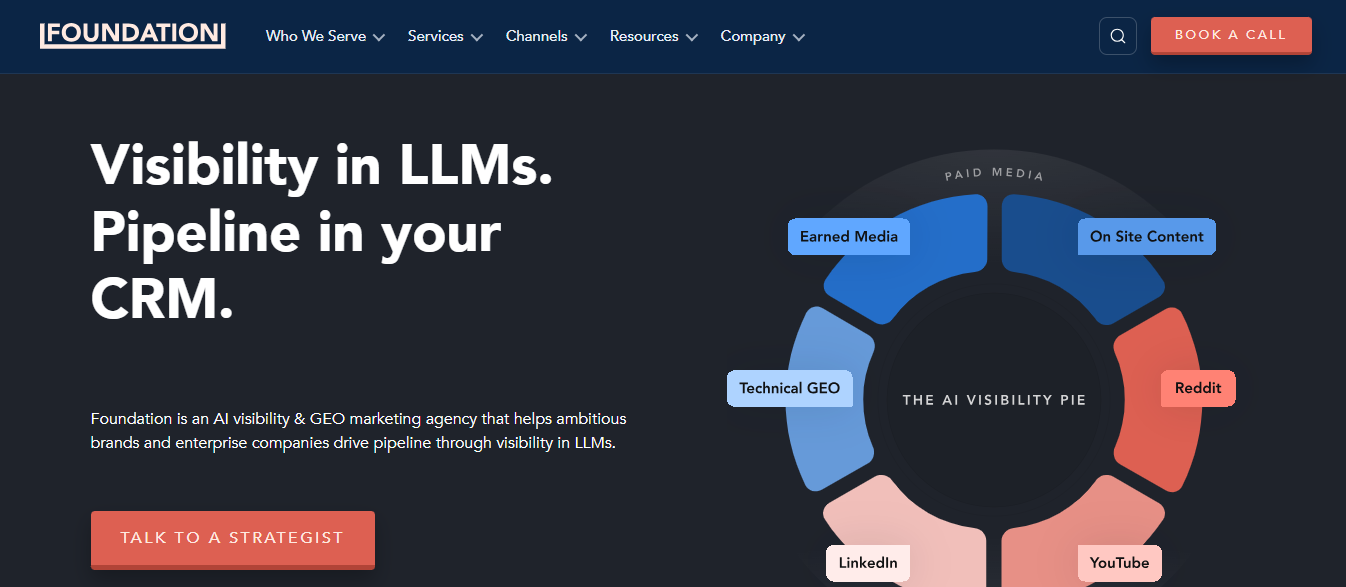
Foundation Marketing is an AI visibility and generative engine optimization agency for B2B brands, working in four stages: research, create, distribute and optimize. Its clearest contribution is distribution. It says it spreads a brand’s narrative across the sources buyers and AI systems draw on, including search, Reddit, YouTube and earned media, and that it tracks citation rate, share of model and AI-driven pipeline.
Its services also cover technical SEO, content marketing strategy, thought leadership, digital PR and measurement, with clients described across B2B SaaS, cybersecurity, martech, professional services and manufacturing. Teams that already publish steadily and want more from each piece may also find our guide to content atomization a useful companion.
Best fit: B2B brands that already have solid content and need it to reach buyers and AI answers, not just sit on the blog.
Worth weighing: Its menu is broad and includes paid media and demand generation, so confirm what a distribution engagement covers and how it is priced. No prices are listed for it.
Quick Comparison of the Agencies
A quick view of where each sits in the chain and what its own site says about engagement terms.
| Agency | Strongest Link in the Chain | Built For | Engagement Detail Stated on Its Site |
|---|---|---|---|
| Omniscient Digital | Demand research | B2B software companies | Full service from $120,000 a year |
| Seer Interactive | Research, technical SEO and measurement | Established and enterprise brands | Consulting retainers, no prices published |
| Outreach Monks | Authority through links and mentions, planned with content | SEO-led brands, SaaS companies, online stores, local businesses | Packages from $799 a month, month to month |
| Siege Media | Authority through assets and PR | Larger brands in SaaS, fintech, e-commerce, health | $8,000 a month minimum, 12-month term, 30-day out |
| Foundation Marketing | Distribution and reach | B2B brands with content in place | No prices listed for distribution |
Based on each agency’s own website. Terms change, so confirm directly.
How to Evaluate an Agency Before Hiring
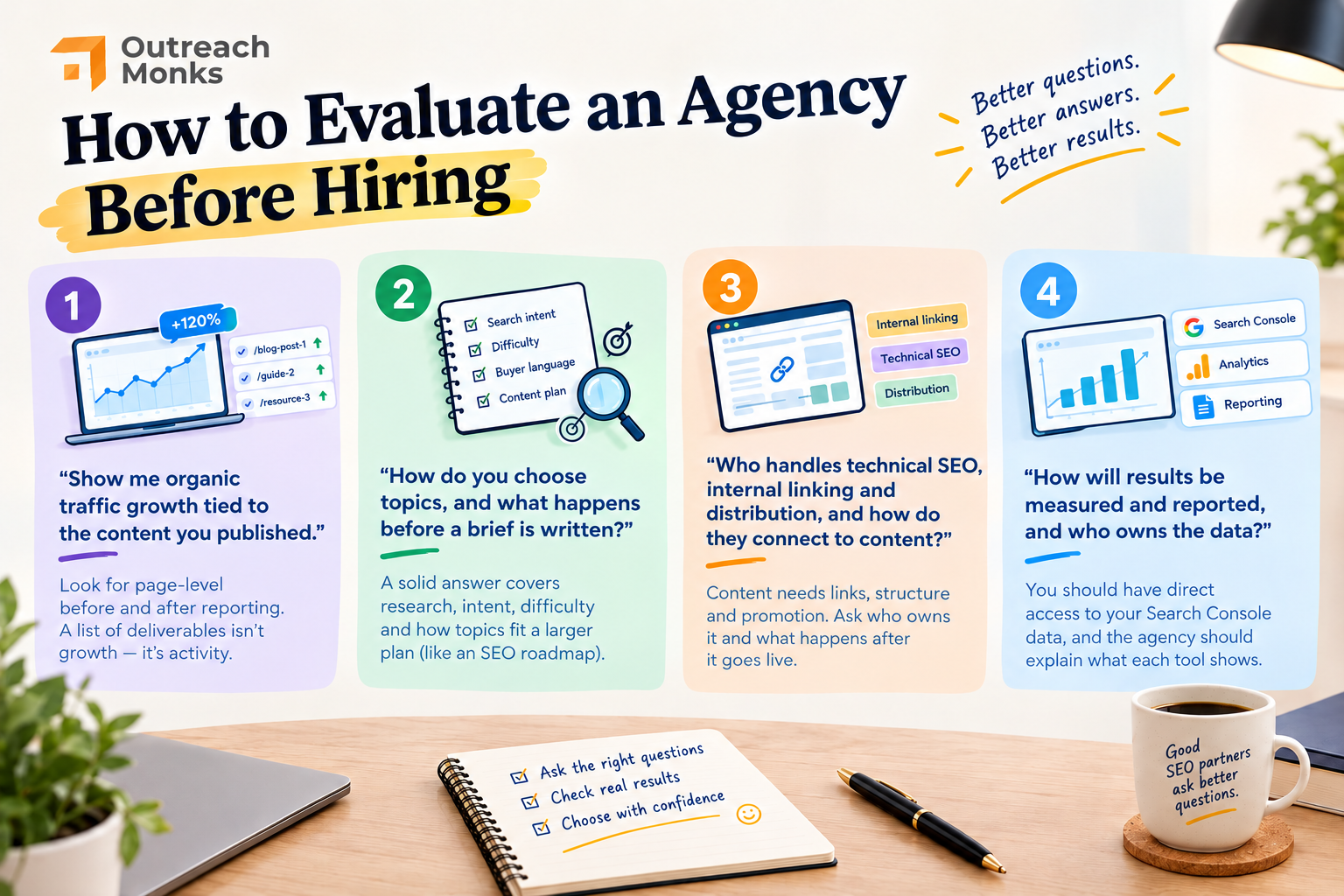
Roundups, this one included, only get you to a shortlist. These four questions do the real filtering on a vendor call.
- “Show me organic traffic growth tied to the content you published, not just content volume.” Listen for page-level before and after reporting, tied to specific pieces. If the answer is a list of deliverables, it is an answer about activity, not growth.
- “How do you choose topics, and what happens before a brief is written?” A credible answer names how search intent, difficulty and buyer language are researched and how topics fit a wider plan, such as an SEO roadmap. Be wary of an answer that starts with a keyword export and ends with a content calendar.
- “Who handles technical SEO, internal linking and distribution, and how do they connect to content?” Content that is not linked well will underperform, so ask who owns internal linking and what happens to a page once it goes live.
- “How will results be measured and reported, and who owns the data?” You should have direct access to your own Search Console performance data, and the agency should be able to explain what each tool shows. Our comparison of Search Console and Google Analytics covers the difference.
One more habit helps: ask for a reference who has been a client for more than a year, and ask them what changed in their organic traffic and what the agency did not do well.
Choosing the Right Partner for Your Gap
No agency on this list is the universal winner, and that is the point. If you publish a lot but nothing ranks, look for demand research and measurement. If your content ranks but earns little trust, look for assets and authority. If good pages sit unseen, look for infrastructure and distribution.
Name your weakest link first, then use the four questions above to test whoever claims to fix it. An organic growth agency is worth what it improves in your own chain, not what it says about itself.
Frequently Asked Questions
What does a content marketing agency actually do for organic growth?
At minimum it plans topics around search demand, produces content and manages publishing. Stronger agencies also coordinate technical SEO fixes, internal linking, distribution and reporting, because growth comes from the whole chain, not from the writing alone. Many now use AI for research and briefs, so ask where people review its output.
How is a content marketing agency different from an SEO agency?
A content marketing agency centers on creating and promoting content that attracts an audience, often across several channels. An SEO agency centers on making a site discoverable in search through technical health, optimization and authority building, as our guide to on-page and off-page SEO describes. The overlap is large, and an organic growth agency typically blends both. Decide by your bigger gap: nothing worth ranking, or good content that is not ranking.
How long does it take to see organic growth from content marketing?
No honest agency can promise a date. New sites, competitive topics and thin link profiles all lengthen the timeline, and it usually takes months for content to be indexed, earn links and build momentum. Treat promises of guaranteed first-page rankings with caution, as we explain in our piece on the first-page SEO guarantee. Ask instead for leading indicators, such as impressions, indexed pages and ranking movement, that show progress before traffic does.
What should I ask a content marketing agency before hiring them?
Ask for organic growth tied to specific published content, how topics are chosen before briefs are written, who owns technical SEO, internal linking and distribution, and how results are measured and reported, including who owns the data. A reference from a client of more than a year is worth more than any case study.
Can content marketing work without SEO support?
It can, through email, social media, community, partnerships and PR, and those channels can be effective. For organic search, though, content without SEO foundations tends to stall: topics are chosen without demand data, pages are poorly linked and nothing tells search engines how the content fits together. If search is a goal, SEO support is not optional.
