
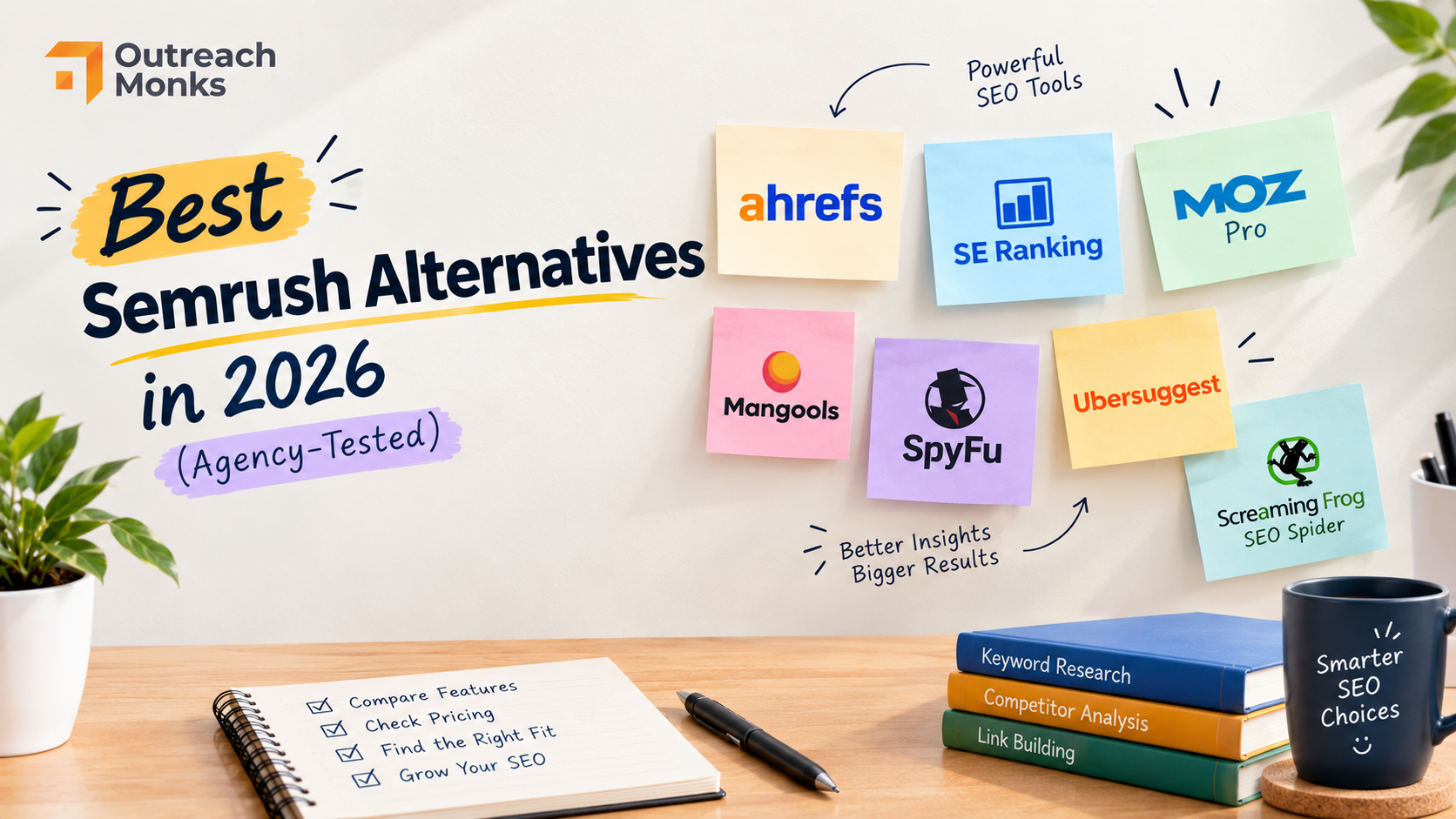
Nobody goes looking for a Semrush alternative because they woke up curious. It usually starts with a renewal invoice, a seat you cannot justify, or one specific thing the platform does not do well enough for the work in front of you. The useful question is not which tool is best overall. It is which one covers the part of Semrush you actually use, at a price that makes sense for the size of your team.
This list is written from an agency point of view, which mostly means two things the consumer reviews skip: what a tool costs once more than one person needs access, and what breaks when you move client reporting onto it.
The short version : Ahrefs for backlink depth and the closest like for like swap. SE Ranking for agencies who want the whole suite at a lower seat cost. Moz Pro if local SEO is most of your work. Mangools if you want keyword research without a platform. SpyFu for cheap competitor and paid search history. Ubersuggest if budget is the only constraint. Screaming Frog as the technical half of a two tool stack that together costs less than Semrush.
How We Evaluated These Tools
Most articles on this topic open with a line like “I tested every tool” and then never mention testing again. No dates, no criteria, no sense of what was actually checked. So here is exactly what sits behind this list, including its limits.
What we assessed:
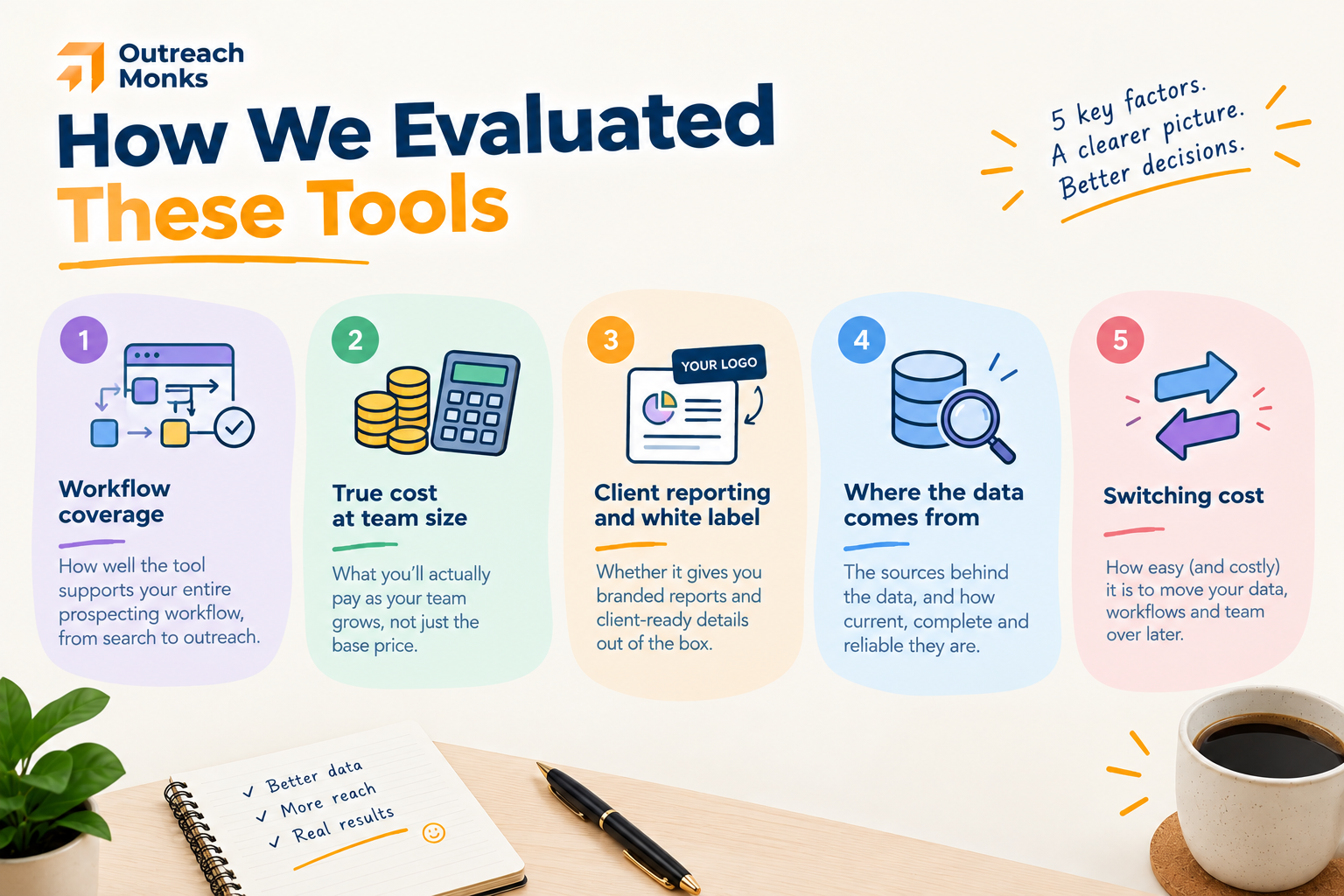
- Workflow coverage. Whether the tool handles the jobs agencies run daily: keyword research, rank tracking, backlink analysis, site audits and client reporting. A tool that covers four of the five is a stack component, not a replacement.
- True cost at team size. Headline pricing is per plan. Agency cost is per plan plus seats plus the projects you can run before the next tier. We priced each tool the way an agency would actually buy it.
- Client reporting and white label. Whether reports can carry your branding, whether clients can be given their own logins, and what the export limits look like.
- Where the data comes from. Backlink index size and refresh rate, keyword database coverage, and which countries are supported properly rather than nominally.
- Switching cost. What you lose on the way out of Semrush, which is the part almost nobody writes about.
What we did not do, and will not pretend we did:
We did not run a controlled accuracy benchmark comparing keyword volumes or backlink counts across every tool on identical domains. That is a serious study, it needs to be repeated on a schedule to stay honest, and anyone presenting one in a listicle without publishing their method is asking you to take it on faith. Where tool indexes are known to disagree, we say so and tell you how to check it yourself on your own site, which is the only sample that matters to you anyway.
Pricing below was checked in October 2026. Figures for Ahrefs and Screaming Frog come from the vendors’ own pricing pages. Semrush, SE Ranking, Moz, Mangools, SpyFu and Ubersuggest figures come from third party pricing trackers, because those vendor pages blocked automated access at the time of writing. Treat the third party numbers as indicative and confirm before you buy. Every tool changes its pricing more often than articles like this get updated.
Disclosure: Outreach Monks sells link building services, not SEO software. We have no affiliate relationship with any tool here and earn nothing if you sign up. Several of the highest ranking articles on this exact query are published by companies that place their own product at number one without saying so.
Why Agencies Start Looking Elsewhere
Semrush is a genuinely strong platform, and it is worth being clear about what you would be giving up. It is the broadest suite on the market, its keyword database is enormous, and the paid search data has no real equivalent at the price. For a single in house marketer who uses most of the toolkit, it is hard to beat.
The friction shows up in three places. The first is cost structure. Semrush Pro runs around $139.95 a month, Guru around $249.95 and Business around $499.95, and additional user seats are charged on top of the plan rather than included. For a solo consultant that is one line on a card statement. For a six person team it compounds quickly, and it is the single most common reason agencies start shopping.
The second is breadth you do not use. Most teams live inside three or four reports and pay for forty. The third is specific gaps. Backlink index depth is the one that comes up most often, which is why Ahrefs keeps appearing on lists like this, and local pack tracking is the other.
One thing worth saying before the list: if the gap you are trying to close is authority rather than data, no tool on this page fixes it. Software tells you which links your competitors have. It does not get you any. That is a manual outreach problem, and swapping platforms will not move it.
1. Ahrefs
Ahrefs is the closest thing to a straight swap, and the usual destination for teams whose main complaint is backlink data. The index is the deepest in the category and it refreshes fast, which matters if you are auditing a link profile or watching what a competitor earned last month rather than last quarter.
Lite starts at $129 a month, Standard at $249 and Advanced at $449, with Enterprise at $1,499. On the surface that reads as cheaper than Semrush at the entry tier and comparable higher up. Read the seat terms before you celebrate, because Ahrefs has historically been strict about account sharing and the cheaper plans are built around a single user. There is also a free tier that gives limited Site Explorer and Site Audit access for a domain you verify as your own, which is genuinely useful for checking your own backlink profile for toxic links without paying for anything.
Where it is weaker than Semrush: paid search data is thinner, the keyword database is smaller in several non English markets, and there is no real equivalent to Semrush’s wider marketing toolkit. If your reporting leans on PPC competitive data, this is a downgrade, not a swap.
| Switch to Ahrefs if | Stay with Semrush if |
|---|---|
|
|
2. SE Ranking
SE Ranking is the alternative most often picked by agencies specifically, and the reason is structural rather than technical. It covers close to the same ground as Semrush, and its pricing is built around agencies running many client projects instead of one marketer running one site.
Entry pricing sits around $129 a month with a meaningful discount on annual billing, and there is a separate agency package. White label reporting is included rather than bolted on, client logins are straightforward, and the report builder is good enough to send to a client without rebuilding it in Looker Studio first. If your team currently spends a day a month assembling reports, that alone changes the maths.
Where it is weaker: the backlink index is smaller than both Semrush and Ahrefs, and keyword data in competitive English markets is less deep. For most agency reporting that is an acceptable trade. For serious link analysis it is not, which is why plenty of teams run SE Ranking for reporting and keep a backlink tool alongside it.
| Switch to SE Ranking if | Stay with Semrush if |
|---|---|
|
|
3. Moz Pro

Moz Pro is the easiest platform on this list to hand to someone who is not an SEO specialist, and that is a real agency advantage when junior staff or clients need to read the thing without a training session. Domain Authority remains the metric clients recognise, whether or not SEO practitioners love it.
Plans run roughly $39 for Starter, $79 Standard, $143 Medium and $239 Premium, with a 30 day trial. The local SEO tooling is the genuine differentiator: if a meaningful share of your work is local citations and map pack visibility, Moz handles it better than the generalist suites do.
Where it is weaker: the keyword database and backlink index are both smaller than Semrush’s, and the platform has felt slower to ship than its competitors for a while now. You are buying clarity and local depth, not frontier data.
| Switch to Moz Pro if | Stay with Semrush if |
|---|---|
|
|
4. Mangools

Mangools is not trying to be a platform, and that is the point. It is a small set of tools built around keyword research that most people find genuinely pleasant to use, which is not a word that gets applied to this category often.
Pricing runs about €61 a month for Basic, €81 for Premium and €141 for Agency, dropping substantially on annual billing. Note the currency: it is priced in euros, which is worth checking against your own billing. The limits are per 24 hours rather than per month, so Basic gives you 100 keyword lookups a day. For a consultant doing focused keyword difficulty research that is plenty. For an agency onboarding three clients in a week it is not.
Where it is weaker: almost everywhere outside keyword research. Site auditing is basic, the backlink tool is light, and there is no serious client reporting layer. This is a replacement for the part of Semrush you use, not for Semrush.
| Switch to Mangools if | Stay with Semrush if |
|---|---|
|
|
5. SpyFu

SpyFu does one thing better than anything else at its price: it shows you what competitors have been doing in paid and organic search going back years, and it does not meter you aggressively while you look.
Basic is around $39 a month, Pro around $119 and Team around $249 for five users, with extra seats at roughly $30 each and real discounts on annual billing. The historical depth is the draw. Being able to show a prospect every keyword a competitor has bid on since well before you met them is a pitch asset, and plenty of agencies buy SpyFu for business development rather than delivery.
Where it is weaker: rank tracking and site auditing are thin, the international data is patchy outside the US, and nobody should be running client SEO reporting out of it. Treat it as an intelligence layer sitting next to your main tool.
| Switch to SpyFu if | Stay with Semrush if |
|---|---|
|
|
6. Ubersuggest

Ubersuggest is the budget answer, and it is worth being direct about what that means. Individual runs around $29 a month, Business around $49 and Enterprise around $99, and the lifetime deals at roughly $290, $490 and $990 are the genuinely interesting part. If a tool you will use for three years costs the same as ten months of Semrush, the arithmetic is hard to argue with.
What you get is competent keyword research, basic site auditing and simple rank tracking. What you do not get is data depth that holds up under scrutiny, which matters when a client questions a number. For an agency it works best as a secondary tool or for smaller retainers where the reporting burden is light, often alongside free sources like Search Console and Analytics doing the heavy lifting on actual performance data.
Where it is weaker: essentially everywhere that depth matters. Backlink data is shallow, keyword volumes diverge noticeably from other tools, and the project limits on lower tiers bite quickly in an agency setting.
| Switch to Ubersuggest if | Stay with Semrush if |
|---|---|
|
|
7. Screaming Frog SEO Spider
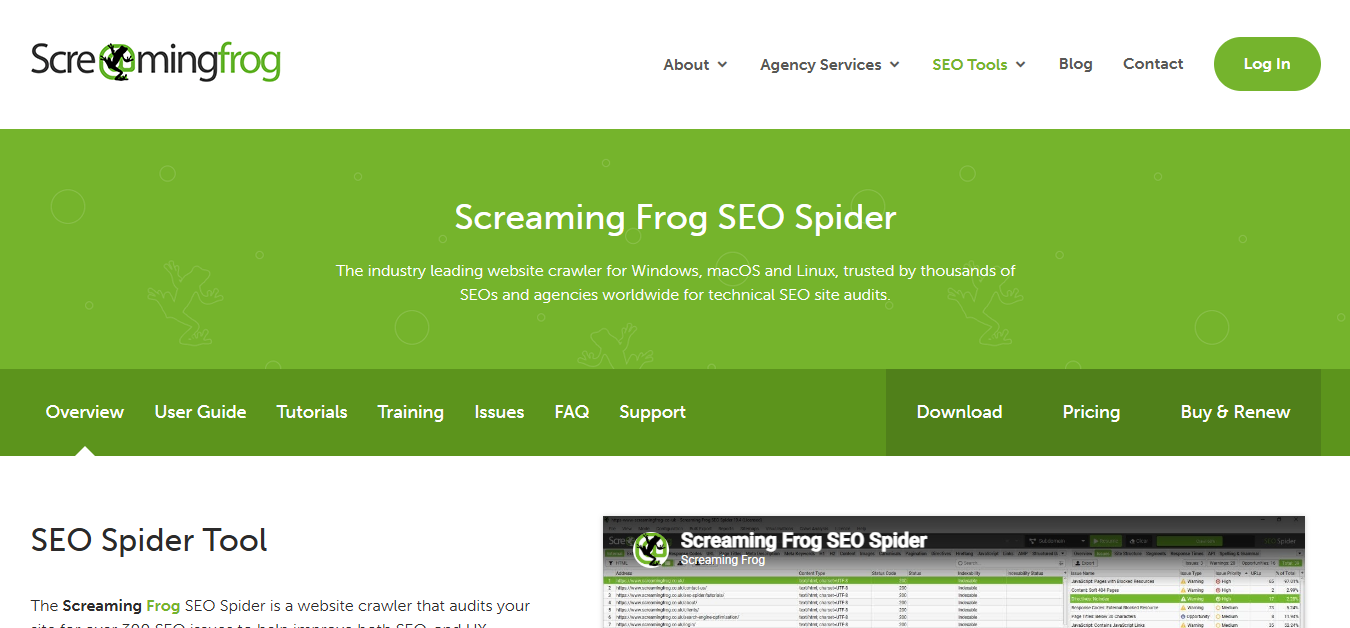
Screaming Frog is on this list for a reason that only becomes obvious once you have tried to replace Semrush with a single product: most teams cannot, and the cheapest honest answer is usually two tools instead of one.
It costs $279 per licence per year, with volume discounts starting at five licences, and the free version crawls up to 500 URLs. For technical auditing it outperforms the crawler built into every suite on this list, because that is the only thing it does. Paired with a research tool, it covers the technical half of what you were paying Semrush for. A licence plus Ahrefs Lite lands in similar territory to Semrush Pro while giving you a better crawler and a deeper link index, and that stack is what a lot of technical and off page work actually runs on in practice.
Where it is weaker: it is not a suite and does not pretend to be. No keyword research, no rank tracking, no client reporting, and it runs on your machine rather than in the cloud, so large crawls depend on the hardware you give it.
| Switch to Screaming Frog if | Stay with Semrush if |
|---|---|
|
|
Quick Comparison of the Seven Alternatives
Here is how the seven line up on the things that decide the purchase, so you can shortlist before going back to whichever entries apply to you.
| Tool | Starting Price | Standout Strength | Best Fit |
|---|---|---|---|
| Ahrefs | $129 per month | Deepest, freshest backlink index | Link-focused teams |
| SE Ranking | About $129 per month | Agency pricing and white-label reports | Agencies with many clients |
| Moz Pro | About $39 per month | Local SEO and readable reports | Local and small business work |
| Mangools | About €61 per month | Keyword research and usability | Consultants and small teams |
| SpyFu | About $39 per month | Years of competitor and PPC history | Business development |
| Ubersuggest | About $29 per month | Lifetime pricing option | Tight budgets |
| Screaming Frog | $279 per year | Best-in-class technical crawling | The technical half of a stack |
Ahrefs and Screaming Frog figures are from vendor pricing pages. The rest are from third party trackers and should be confirmed with the vendor before purchase.
What Switching Actually Costs You
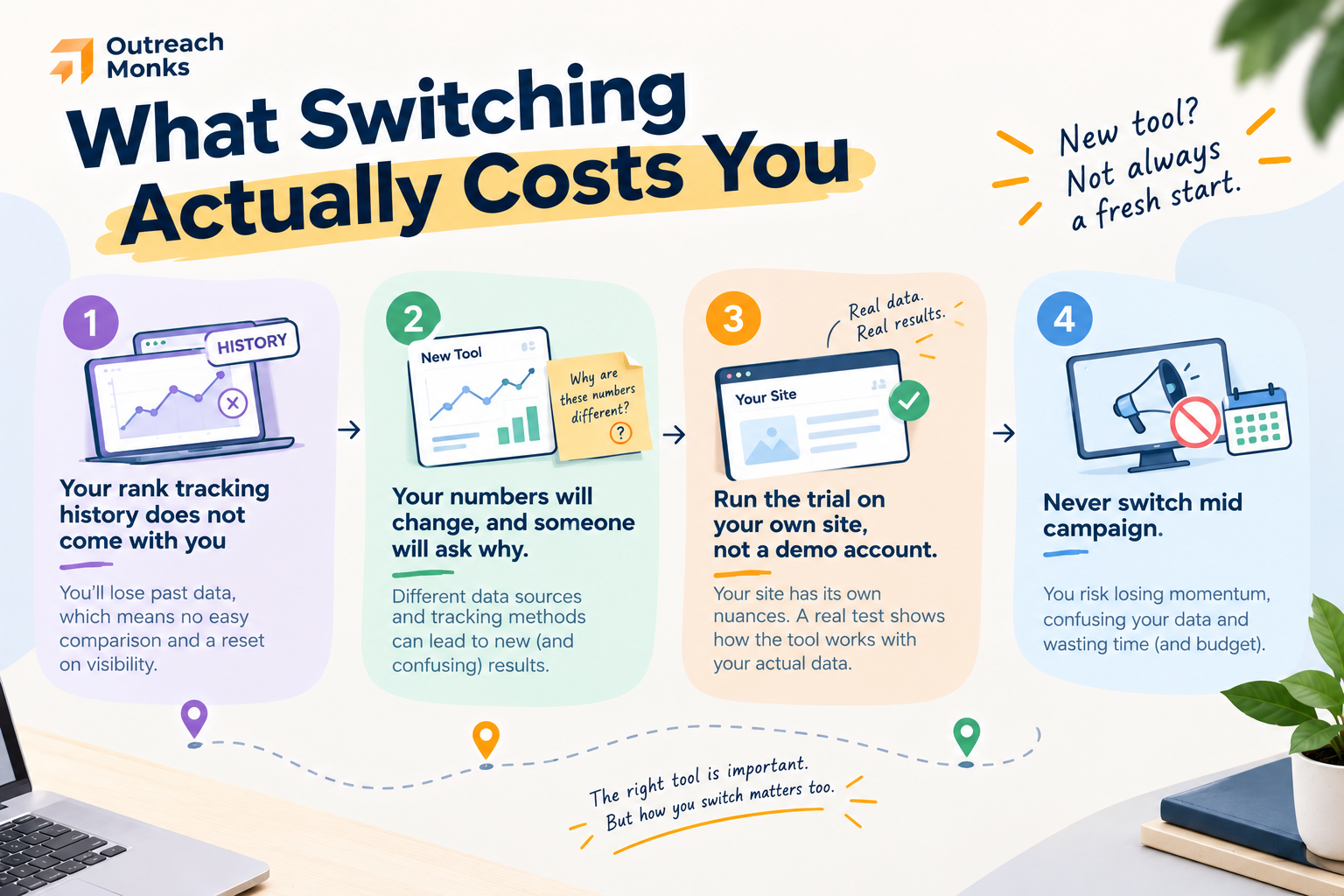
This is the section missing from every article we read while researching this one, and it is the part that causes regret. Changing tools is not free, and the costs are not on the pricing page.
1. Your rank tracking history does not come with you
This is the big one. Tracked keyword history lives in the platform that collected it. When you leave Semrush, the twelve or twenty four month ranking trend you have been showing clients goes with it. You can export the data, but you cannot import it into the new tool and have the charts continue. Any client who is used to seeing a year of trend will see it reset to week one.
The workaround is to run both tools in parallel for a reporting cycle, export your history to a spreadsheet before you cancel, and tell clients the chart is restarting before they notice it themselves. Do not discover this in the middle of a quarterly review.
2. Your numbers will change, and someone will ask why
Different tools use different indexes, so search volumes, difficulty scores and backlink counts will not match what you reported last month. Nothing has gone wrong, but a client looking at a keyword that was 2,400 searches and is now 1,900 needs an explanation that does not sound like backpedalling. Decide how you are going to say it before you send the first report, and if your SEO roadmap has targets written against old figures, restate them in the new tool’s terms at the same time.
3. Run the trial on your own site, not a demo account
Every vendor demo looks good on a domain the vendor chose. Pick two or three sites you know intimately, ideally a client you have worked on for a year, and check whether the tool finds what you already know is there. Does the backlink report include the placements you earned? Does the site audit catch the issues you fixed? If a tool misses things you can verify by hand, that is the only accuracy test that should matter to your buying decision.
4. Never switch mid campaign
Change platforms at the start of a reporting period, never in the middle of one. If you are running an active link building campaign, finish it on the tool you started it on, because trying to attribute results across two data sources mid flight produces reports nobody trusts, including you.
So, Which One Should You Actually Pick?
There is no best Semrush alternative, only a best fit for the part of Semrush you actually use. If that part is backlink data, Ahrefs. If it is client reporting across a portfolio, SE Ranking. If it is local visibility, Moz. If it is keyword research alone, Mangools or Ubersuggest depending on your budget. If it is competitive intelligence for pitching, SpyFu. And if it is technical auditing, Screaming Frog plus a research tool will beat the all in one you were paying for.
Before you move, open your current account and look at which reports you opened in the last ninety days. Most teams find the answer is four or five. That list, not a feature comparison, is what you are actually shopping for. And if the honest answer is that no tool is the bottleneck because the links are, that is the exact problem Outreach Monks works on every day: white label link building or a managed programme will move the numbers that a different dashboard only measures.
Frequently Asked Questions
Is there a free alternative to Semrush?
Not a complete one, but the free stack is better than people assume. Google Search Console gives you real impression and click data that no paid tool can match, because it comes from Google rather than an estimate. Ahrefs offers free limited access for a site you verify as your own, Screaming Frog crawls up to 500 URLs free, and Mangools and SpyFu both have free accounts. For a single small site, that combination covers a surprising amount. What you give up is competitor data, which is the thing paid tools genuinely sell you.
What tool do agencies actually use instead of Semrush?
In practice, most agencies that leave Semrush land on either Ahrefs or SE Ranking, and the split is predictable. Teams whose service is built on links and authority go to Ahrefs. Teams managing a portfolio of client sites where reporting volume is the pain point go to SE Ranking, because the per seat and per project economics work better. Plenty of agencies keep a cheap third tool for competitor research alongside whichever they chose.
Can you fully replace Semrush with one tool, or do most teams use two?
Most use two, and that is not a failure of the alternatives. Semrush is unusually broad, so a single cheaper product rarely covers all of it. The common pattern is one research platform plus one specialist, typically a crawler or a competitor intelligence tool. Two tools often still cost less than Semrush plus its seats, and each does its job better than a bundled module would.
Is Ahrefs or Semrush better for backlink data?
Ahrefs, for most use cases. The index is larger and refreshes more often, which shows up most clearly when you are looking at links earned recently rather than historically. Semrush has closed the gap considerably and its backlink tooling is perfectly usable, so this is not the gulf it was a few years ago. If link analysis is a core part of what you sell, the difference is still worth paying for. If you check backlinks occasionally, it is not a reason to switch on its own.
Are cheaper Semrush alternatives as accurate?
Generally no, and the gap is widest on backlink data and on search volumes outside major English markets. That said, accuracy matters less than people think for most decisions. If you are deciding which of two keywords to target, a tool that is directionally right is enough. If you are reporting absolute numbers to a client who will hold you to them, or auditing a link profile for risk, precision starts to matter and the cheaper tools show their limits. Match the tool to the stakes of the decision.
