Imagine this: someone searches your brand on Google and finds multiple articles talking about you. Sounds great, right?
Now imagine none of those articles link back to your website.
That’s not just frustrating—it’s lost SEO value. Those mentions could have been sending authority, traffic, and trust signals to your site, but instead, they’re doing nothing for your rankings. Even worse, your competitors may be turning similar mentions into backlinks while you’re missing out.
Unlinked brand mentions are one of the most overlooked link-building opportunities in SEO. The hard part, getting noticed, is already done. The brand trust already exists. All that’s missing is the link.
What Are Unlinked Brand Mentions?
Unlinked brand mentions occur when your brand name, product, or company is mentioned on a website without a clickable link to your site. People can read the mention, but they can’t click through to your website.
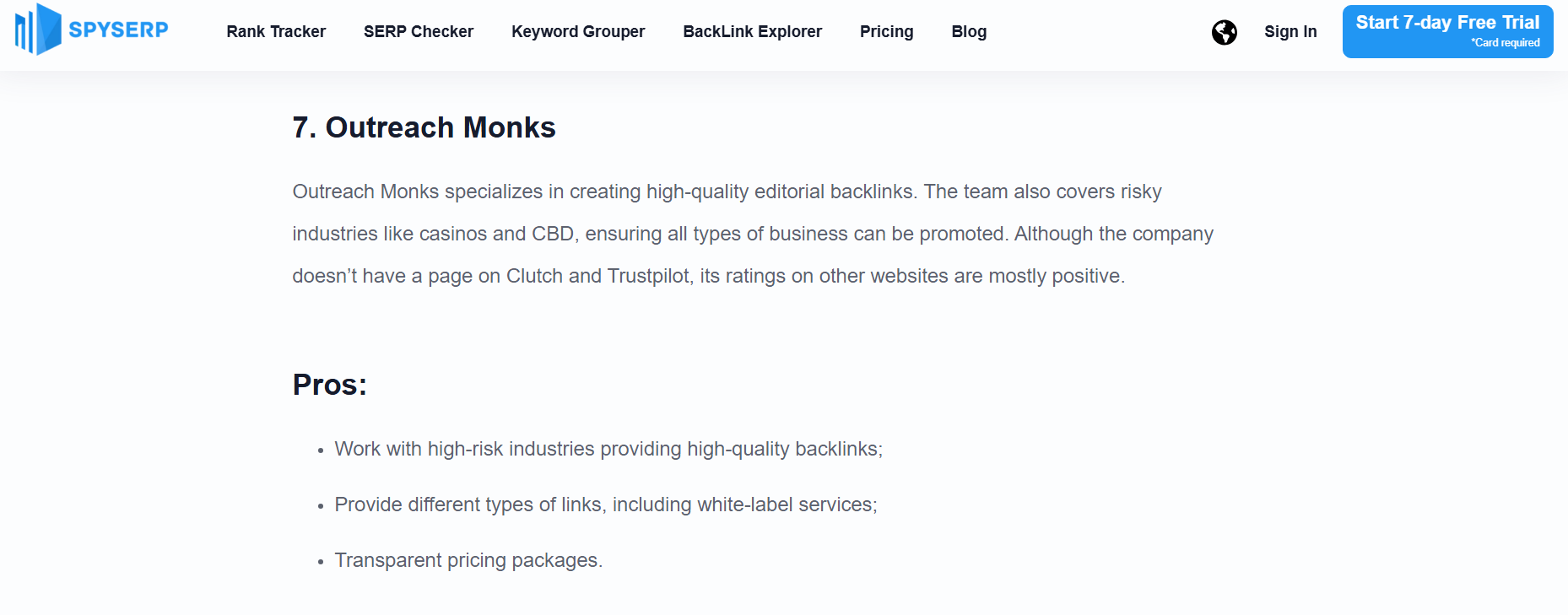
In the screenshot above, you’ll notice that our brand is mentioned in this listicle article “7 Best Link Building Services,” but the mention is unlinked. This is a classic example of an unlinked brand mention. While brand mentions help with visibility and trust, they don’t pass full SEO value unless they’re linked.
Adding a relevant backlink allows search engines to properly attribute authority, improves referral traffic, and ensures the mention delivers its true value.
Types of Unlinked Mentions
Unlinked brand mentions don’t always appear the same way. Here are the most common types, with simple examples:
- Main brand name: Your company name is mentioned but not linked.
Example: “Outreach Monks offers link building services,” with no clickable link.
- Brand name variations or misspellings: The brand is mentioned with a slight spelling change or an informal version.
Example: “OutreachMonk” or “Outreach Monk” instead of the correct brand name.
- Product or service names: A specific product or service is mentioned, but the brand or page isn’t linked.
Example: A blog talks about a “white-hat link building service” by your company without linking.
- Taglines or brand phrases: Your slogan or a phrase strongly linked to your brand is used without a backlink.
Example: A site uses “manual link building that delivers results” without linking to your brand.
- People linked to the brand: Founders, team members, or spokespeople are mentioned, but the company isn’t linked.
Example: An interview mentions your founder’s name but doesn’t link to the brand site.
- Events or campaigns: An event or campaign name connected to your brand is mentioned without a link.
Example: A site mentions your webinar or campaign but doesn’t link to the landing page.
Each type represents a missed opportunity. The key is choosing the mentions that make sense to turn into links without forcing it.
📝 Common Places Unlinked Mentions Appear
- 📝 Blogs & Articles – Your brand is mentioned in posts, but no link
- 🛠️ Product / Service Reviews – Mentioned while comparing solutions
- ⭐ Testimonials & Case Studies – Name drops without clickable links
- 📋 Resource Lists – Listed among tools or services, plain text only
- 💬 Forums & Communities – Brand mentioned in discussions or Q&A
- 📱 Social Media & Comments – Mentions without website links
Unlinked Brand Mentions vs Link Reclamation
The table below shows the key differences between Unlinked Brand Mentions and Link Reclamation.
| Aspect | Unlinked Brand Mentions | Link Reclamation |
|---|---|---|
| What it focuses on | Brand mentions without links | A lost backlink that existed earlier |
| Main goal | Turn brand mentions into a new link opportunity | Reclaim lost backlinks |
| SEO intent | Brand authority + link building | Restore SEO value + rankings |
| Outreach type | Request to add a link | Request to restore a link |
| Best use case | When sites mention your brand but don’t link | When backlinks drop due to changes |
Unlinked brand mentions help you earn new backlinks from existing mentions, while link reclamation helps recover links you already had.
When Not to Convert Unlinked Mentions
Not every unlinked mention should be turned into a backlink. Here are some cases when you should avoid converting them:
- Low-quality or spammy websites: Linking from such sites can harm your SEO rather than help it.
- Irrelevant content: Mentions in posts unrelated to your niche or target audience offer little SEO or traffic value.
- Temporary or outdated mentions: If your brand is mentioned in outdated posts or content that doesn’t last long, adding a link might not be very useful.
- Negative mentions: When such mentions talk negatively about your brand, it’s better not to request a link.
Focusing only on high-quality, relevant, and authoritative mentions ensures your efforts pay off, boosting both SEO and brand credibility efficiently. If needed, you can also politely request that the publisher remove your brand name from mentions that are harmful or irrelevant, to maintain your online reputation.
How to Find Unlinked Brand Mentions for Link Building
Finding unlinked brand mentions is the first step to turning recognition into high-quality backlinks and capturing SEO value. Here’s how you can identify them effectively:
1. Using Google Search Operators
Use Google search operators to manually and accurately find unlinked brand mentions.
Search your exact brand name

This shows pages where your brand is mentioned.
Exclude your own website
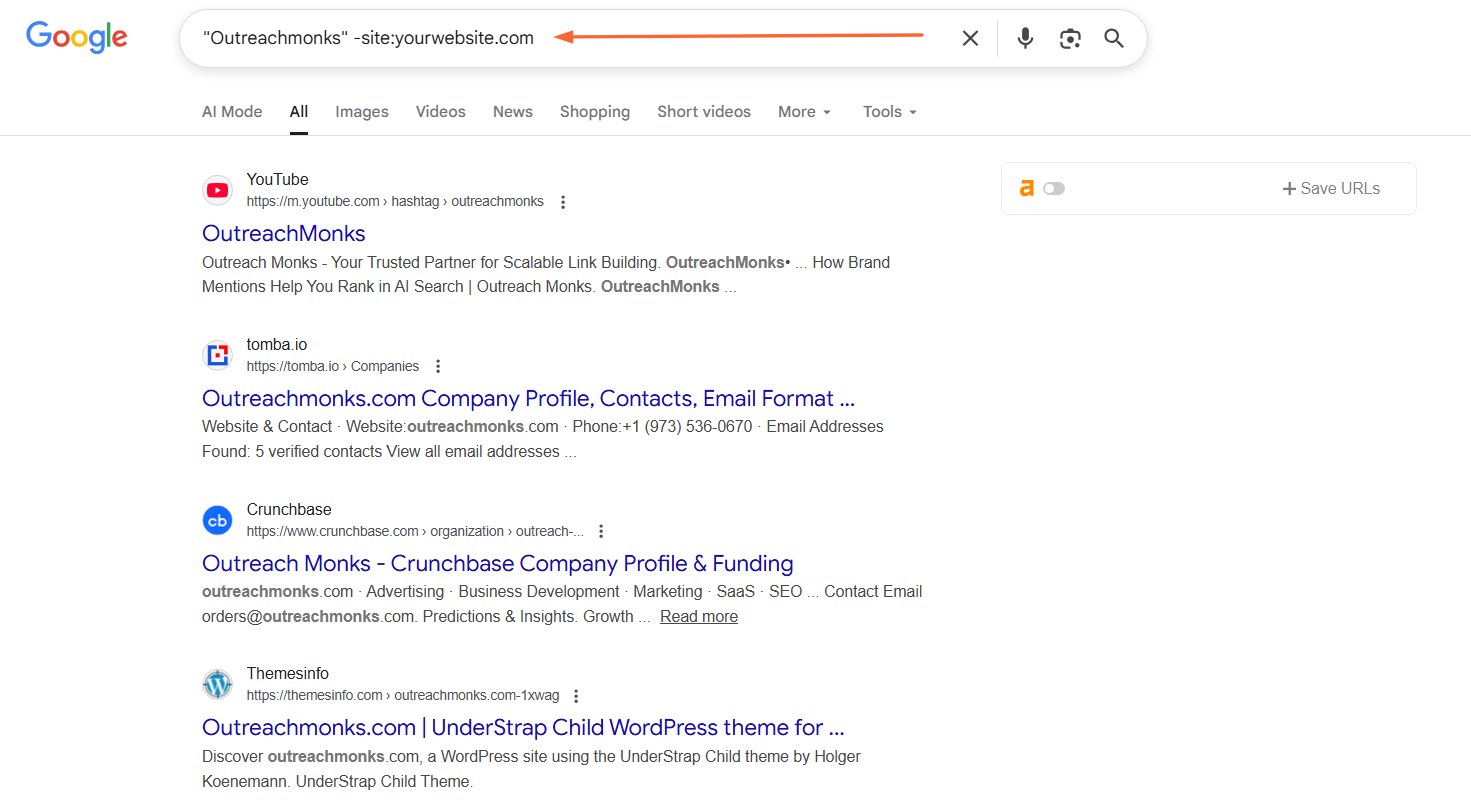
This helps you find brand mentions without links to external sites.
Search brand name variations
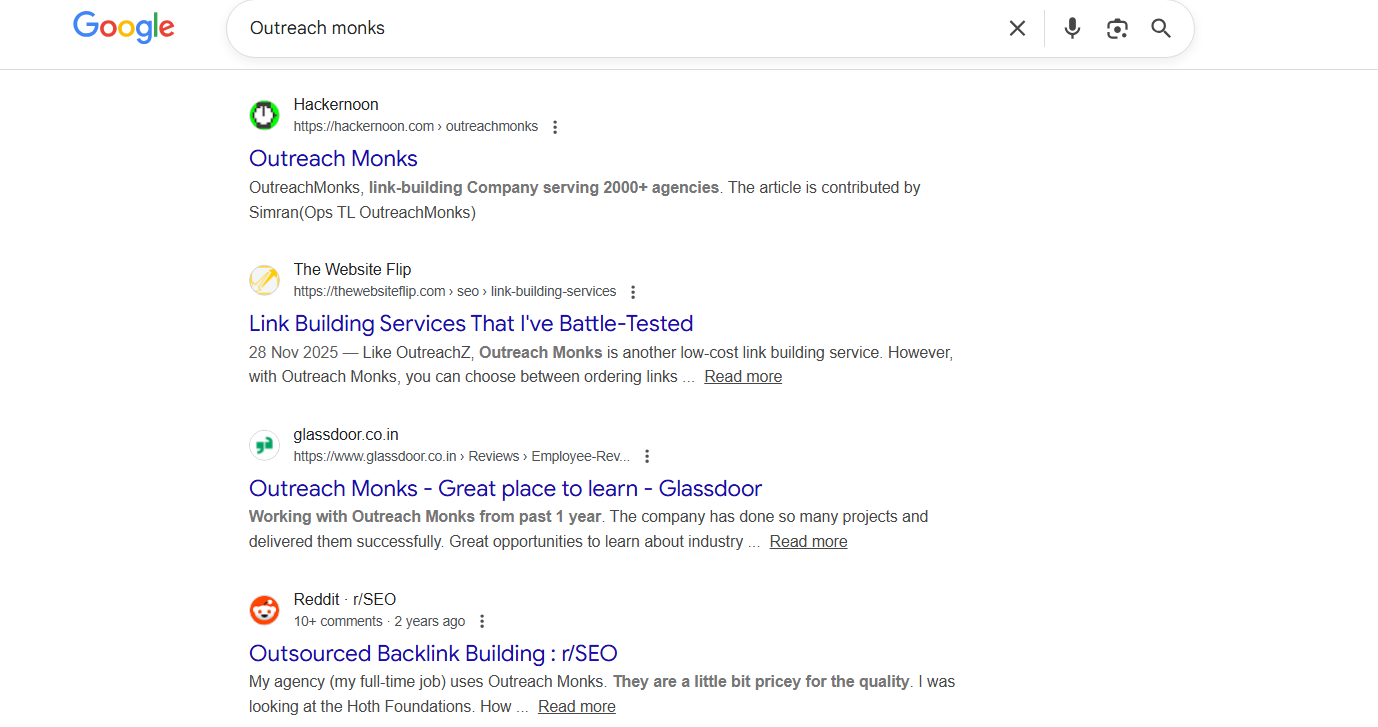
Many sites use different spellings, which creates hidden, unlinked mentions SEO opportunities.
Search product or service names
- “Your Product Name” -site:yourwebsite.com
Product mentions often convert into strong brand mention backlinks.
Find high-intent pages
- “Your Brand Name” review
- “Your Brand Name” comparison

These pages work best for white-hat brand mention link building.
2. Using Google Image Search
Google Image Search is a simple way to find unlinked brand mentions, especially for service-based keywords.
Search your main service keyword + brand name on Google.
Example:

Then switch to the Images tab. You’ll see banners, screenshots, and visuals used by other websites.
Look for images that are not from your own site. Click on the image and open the source page. Check whether your brand is mentioned in the article.
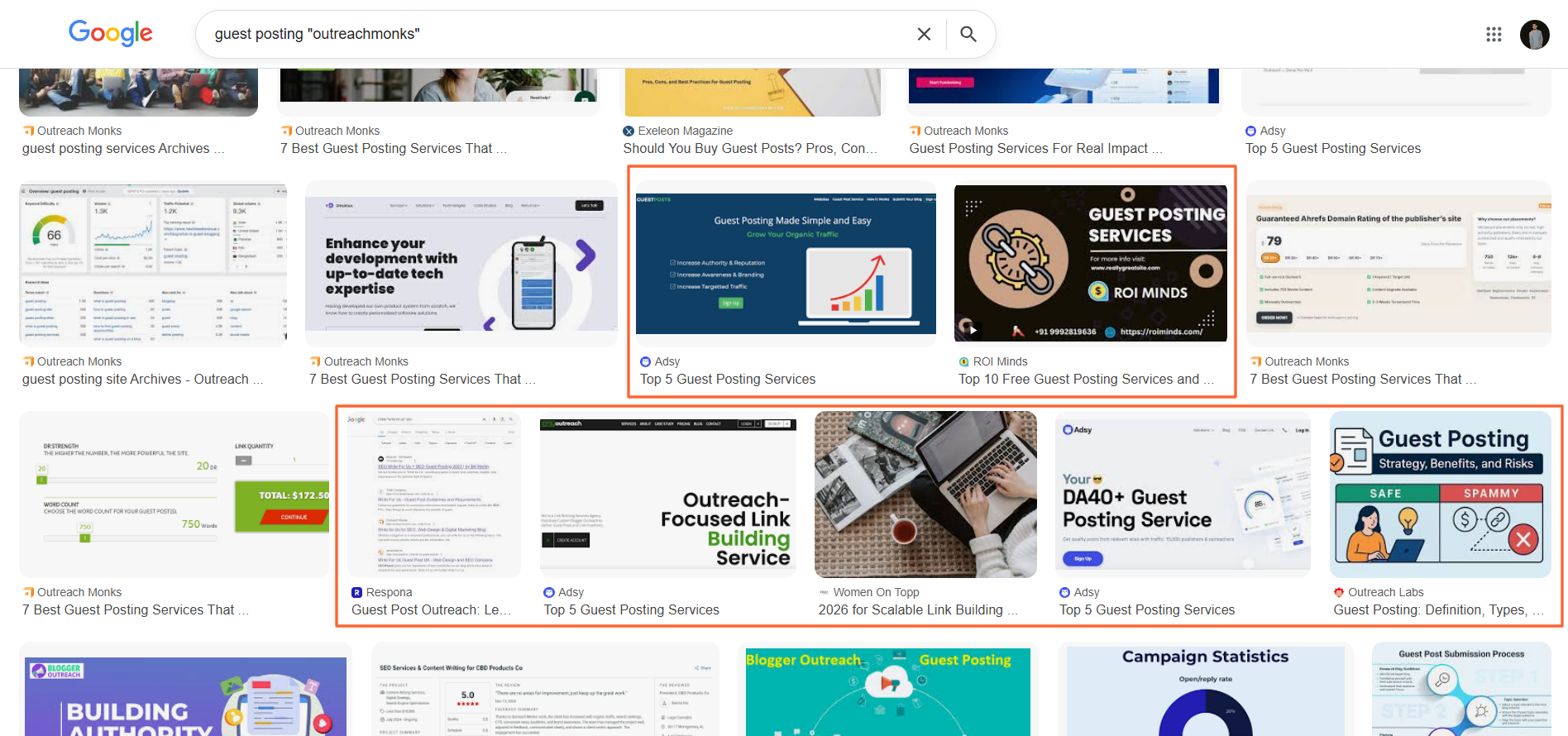
If your brand name appears but there’s no clickable link, you’ve found a brand mention without a link.
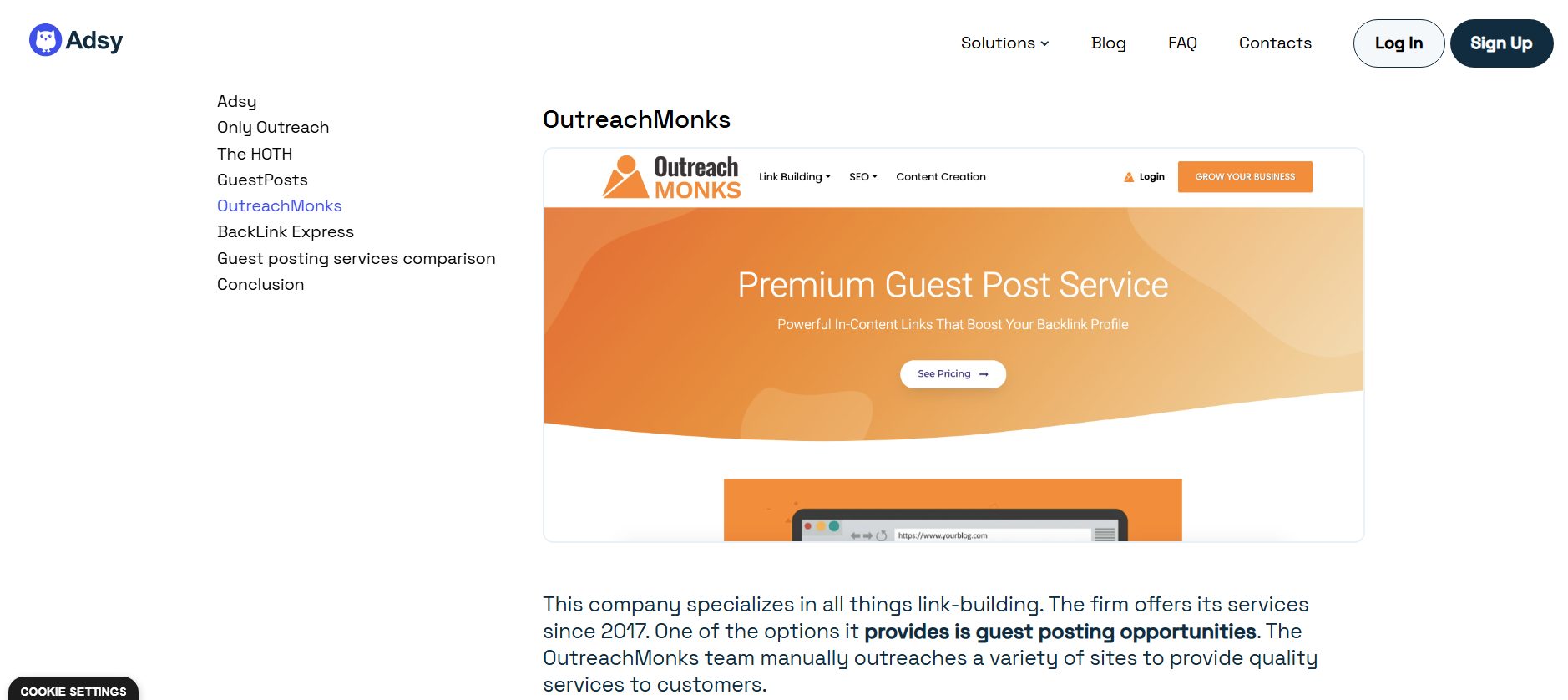
These pages are strong outreach opportunities because the site is already talking about your service.
This method works well for list posts, comparison articles, and service roundups where brand mention link building feels natural.
3. Try Google Alerts
Google Alerts is a free tool that helps you track unlinked brand mentions as soon as they appear online.
Step 1: Open Google Alerts: Go to Google Alerts and enter your brand name in the search box. You’ll immediately see a preview of recent mentions.

Step 2: Customize alert settings: Click on “Show options” to adjust how alerts work for you.
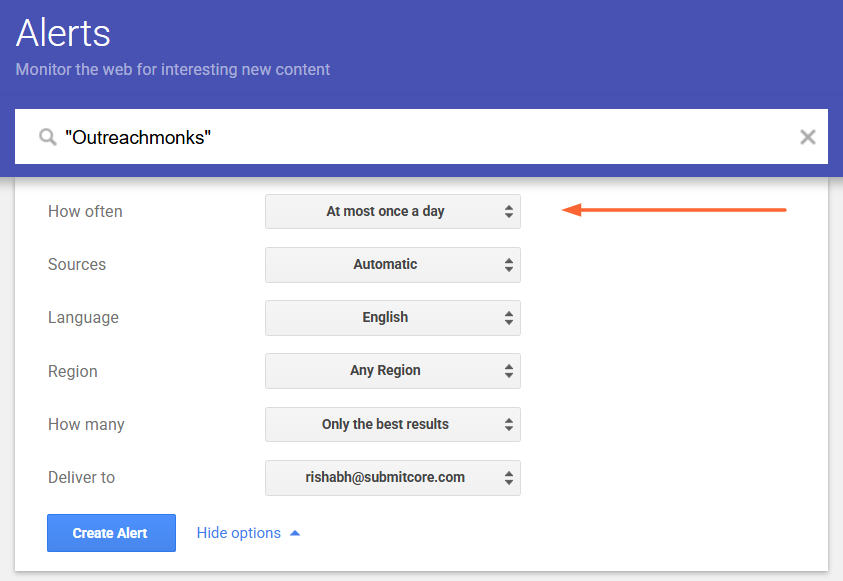
Step 3: Set alert frequency: Choose how often you want updates—instant, daily, or weekly—based on how active your brand is online.
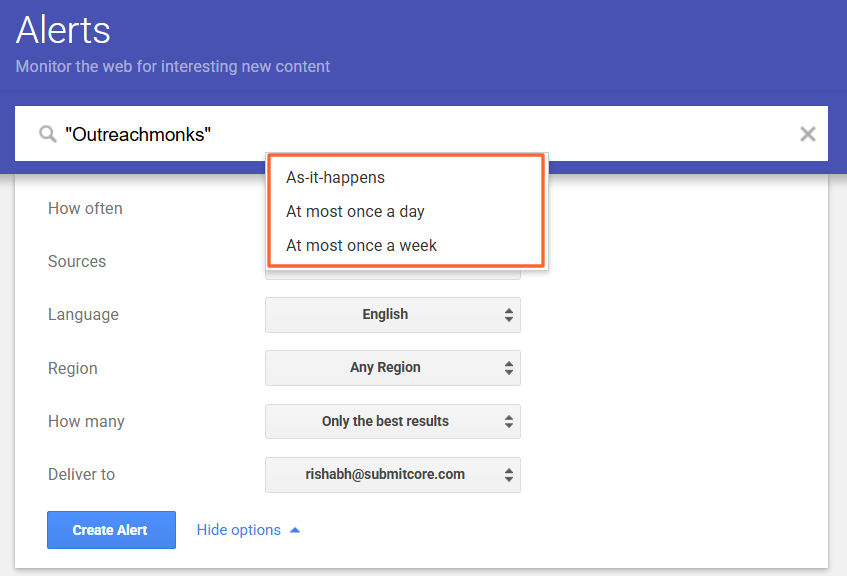
Step 4: Select sources: Keep the source option set to “Automatic” so Google tracks mentions across blogs, news sites, and web pages.

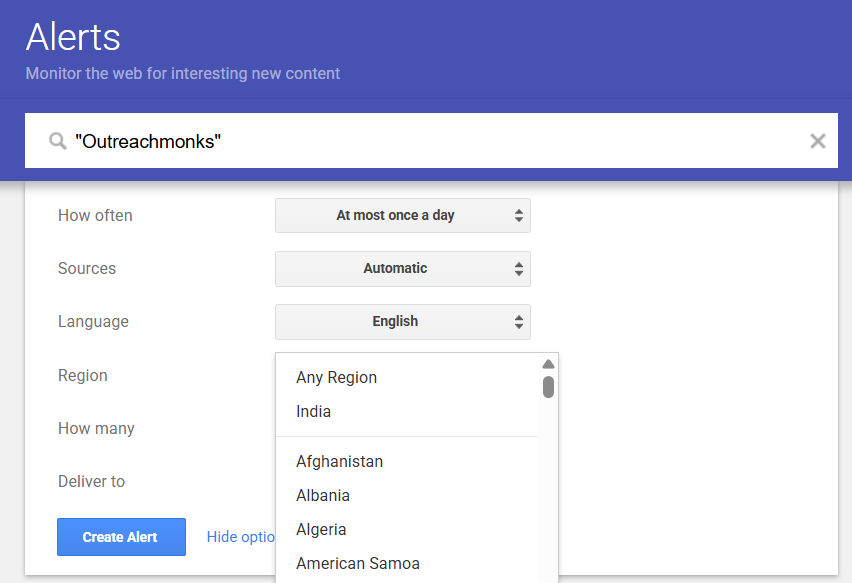
Step 5: Choose language and region: You can monitor mentions globally or limit them to specific languages or locations, depending on your audience.
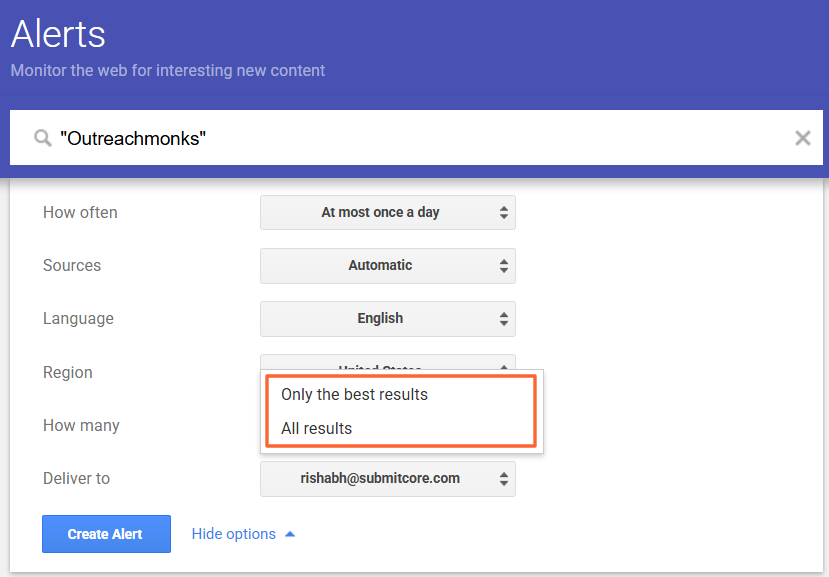
Step 6: Decide result volume: If your brand is small or growing, select “All results” to catch every brand mention without a link. You can refine this later if needed.
Step 7: Create the alert: Select your email address and click “Create Alert.” Google will now notify you whenever your brand is mentioned.

Pro Tip: Review alert results weekly and save high-quality mentions in a sheet for structured outreach later.
4. Find Unlinked Mentions with Semrush’s Brand Monitoring Tool
Semrush’s Brand Monitoring Tool helps you track unlinked brand mentions across blogs, news sites, and web pages.
Step 1: Access Semrush: Log in to your Semrush account. If you don’t have one, you can create an account to get started.

Step 2: Create a project: From the dashboard, go to the Projects section and create a new project using your domain name.
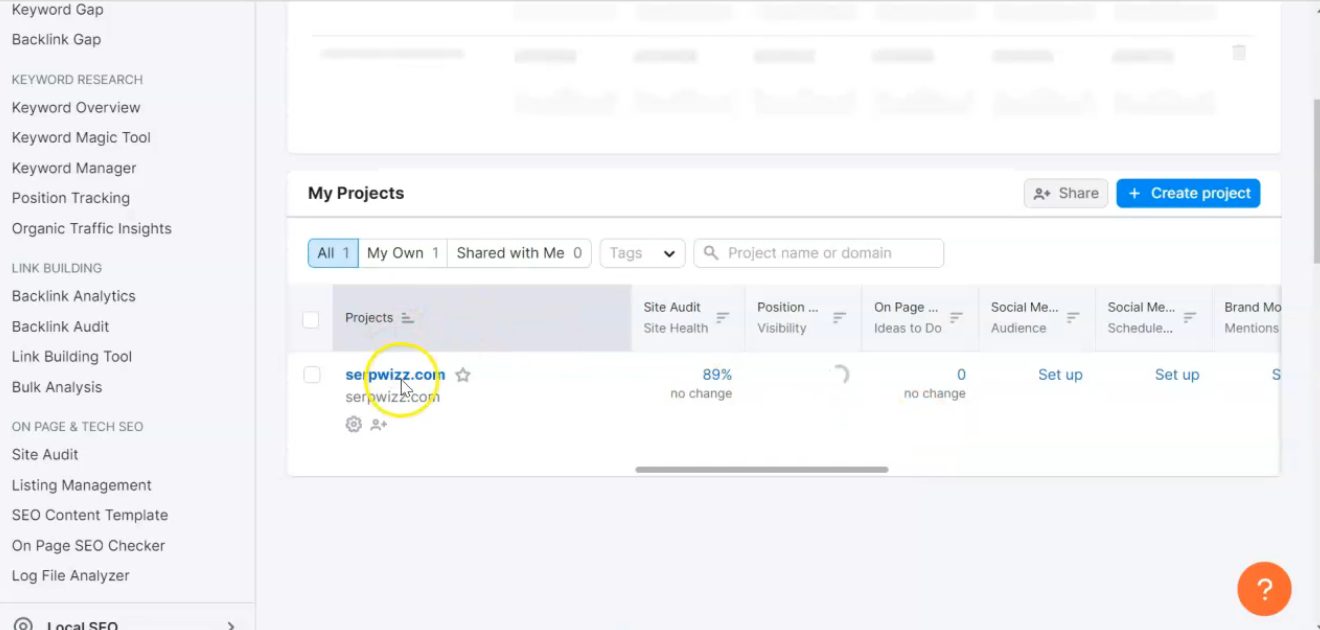
Step 3: Open Brand Monitoring: Inside your project, select the Brand Monitoring tool from the available options.
Step 4: Set up tracking keywords: Enter your brand name, product names, and any relevant variations you want to monitor. These keywords help Semrush detect brand mentions without links.
Step 5: Review mentions: Once tracking starts, Semrush shows pages where your brand is mentioned. Open each result and check whether your brand name includes a backlink.
If the mention exists without a link, it becomes a strong brand mention link building opportunity.
This method works well for brands that want to monitor mentions regularly and scale their outreach efficiently.
5. Using Social & Content Platforms
Social and content platforms can also help you find unlinked brand mentions that don’t show up in SEO tools right away.
Search for your brand name on platforms like Medium, LinkedIn, Reddit, and Quora. Many creators mention brands while sharing experiences, case studies, or recommendations, but don’t add a link.
Click through the posts or articles and check whether your brand name links back to your website. If there’s no link, you’ve found a brand mention.
Content platforms are especially useful for finding mentions in opinion pieces, tutorials, and community discussions. These mentions often feel natural and can turn into quality brand mention backlinks with the right outreach.
This method works best when combined with regular monitoring or a manual outreach approach to ensure valuable mentions don’t go unnoticed.
How to Convert Unlinked Brand Mentions into Backlinks
Now that you’ve found websites mentioning your brand without a link, the goal is simple—get that link added naturally.
Step 1: Organize Your Unlinked Brand Mentions
After finding unlinked brand mentions, the next step is to organize them properly. Without a clear system, it’s easy to miss good opportunities or waste time on low-value pages.
Create a spreadsheet using Google Sheets or Excel and add these columns:
- Mention URL – The page where your brand name appears
- Website Authority – Check domain strength using tools like Ahrefs, Moz, or Semrush
- Estimated Traffic – Get a rough idea of traffic to judge link value
- Mention Context – Blog post, news article, review, resource page, etc.
- Relevance Level – How closely the content matches your niche
Once everything is listed, prioritize authoritative and relevant websites first. These mentions usually deliver a stronger SEO impact and better referral traffic when converted into backlinks.
Step 2: Find the Right Person to Contact
Before sending any outreach email, you need to identify who actually controls the content.
Using a generic “Contact Us” form often leads nowhere. Instead, focus on finding:
- The article author
- The site editor
- Content or SEO manager
You can use tools like LinkedIn, email-finding platforms, or website author bios to find direct contact details. This approach saves time and increases response rates.
Important: Don’t email multiple people from the same company at once. Start with one relevant contact, wait for a response, then move on only if needed.
Step 3: Write a Strong but Natural Outreach Pitch
Now it’s time to request the link—but the way you ask matters.
A good outreach email:
- Mentions the exact page where your brand appears
- Appreciates the existing mention
- Explains how adding a link improves user experience
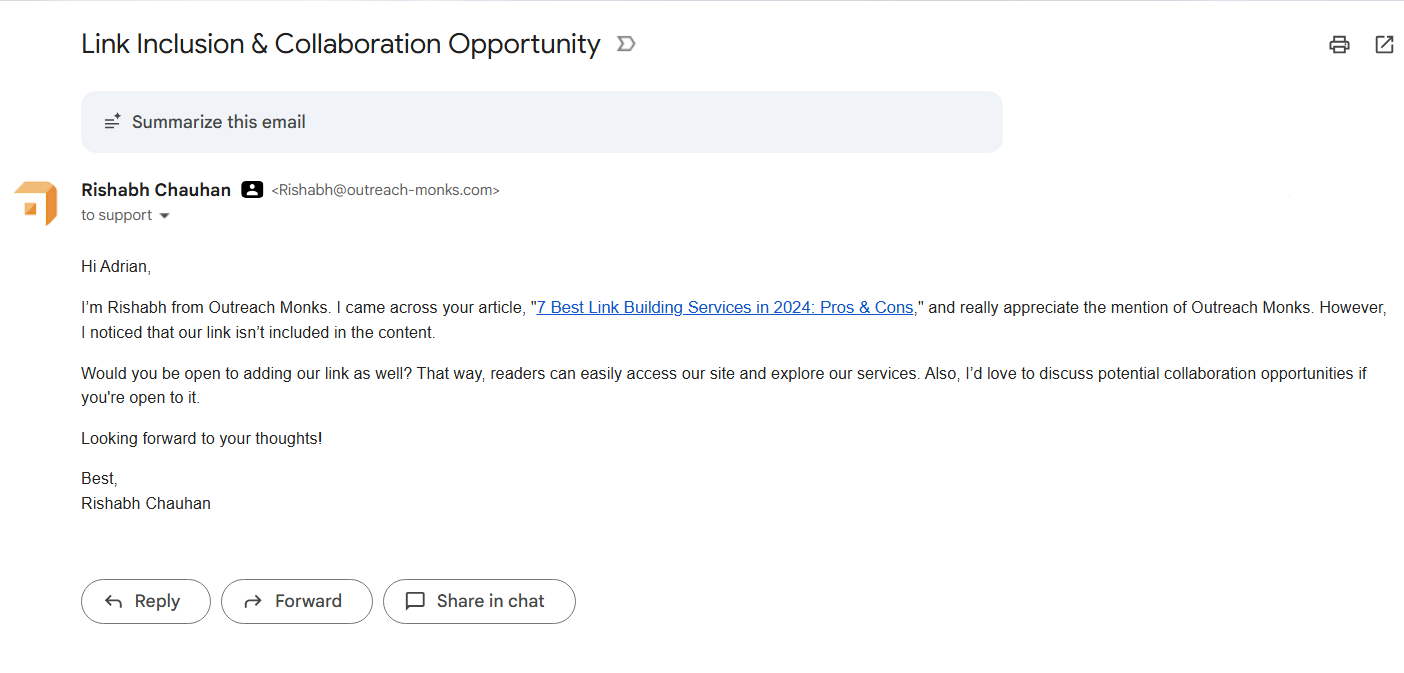
Avoid short, robotic messages. Your goal is to sound helpful, not salesy.
📩 Outreach Best Practices
- ✅ Be polite & natural – A friendly tone always gets better responses
- 🎯 Personalize every email – Mention the article, author, or relevant context
- ➕ Add value first – The link should be genuinely useful for their readers
- 🚫 Don’t be pushy – Being too forceful can even get your mention removed
- 🔁 Follow up smartly – 1–2 polite follow-ups are usually enough
- 📊 Stay organized – Keep track of your outreach and responses
Step 4: Track Outreach & Stay Organized
Unlinked brand mention link building is not a one-day task. To stay efficient:
- Track who you contacted
- Note replies and outcomes
- Record which links went live
Update your spreadsheet regularly with:
- Contact name
- Email sent date
- Follow-up status
- Link added (Yes/No)
Staying organized ensures you don’t repeat outreach or miss valuable opportunities.
Quick Insight: Brands that systemize this process often recover high-quality backlinks at scale. That’s why many businesses rely on manual brand mention outreach services to handle it professionally.
💡 Hidden Opportunity You Shouldn’t Miss
Sometimes, while searching for unlinked brand mentions, you’ll come across websites that have already mentioned and linked to your brand on their own—without any outreach.
Don’t ignore these.
- ✔️ Record them separately
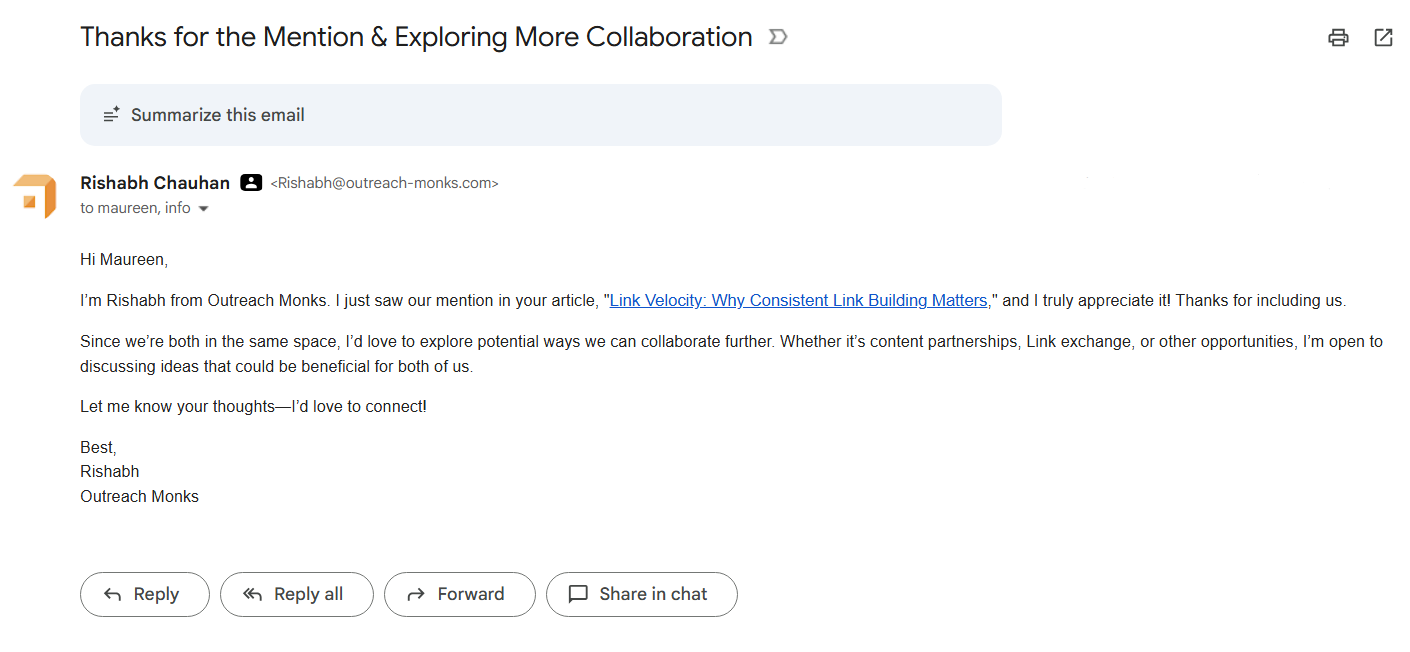
- 📩 Send a simple thank-you email
- 🤝 This often opens the door to future collaborations, partnerships, or repeat backlinks
These warm interactions help build long-term relationships, stronger trust signals, and healthier SEO growth.
🖼️ The example below shows how a simple thank-you message can lead to more collaboration opportunities.
Want More Than Just Fixing Unlinked Mentions?
Finding and converting unlinked brand mentions is a great start—but it only recovers value you already earned. To build new authority, visibility, and trust, you also need fresh, strategic brand mentions on relevant websites.
That’s where Outreach Monks’ Brand Mention Service comes in.
Why Brands Choose Outreach Monks for Brand Mentions:
- Stronger Brand Recognition: Get your brand mentioned on real, niche-relevant websites that build credibility and trust over time.
- AI-Era SEO Advantage: Consistent brand mentions help LLMs like Google AI Overviews, ChatGPT, and Perplexity understand, recognize, and surface your brand more often.
- Visibility in Competitor Comparisons: Appear in “Top 10” lists, industry roundups, reviews, and comparison posts—where your competitors are already winning attention.
- Safer, Sustainable SEO Growth: No PBNs. No shortcuts. Only real websites with real traffic, earned through manual, white-hat outreach.
If you want to recover lost links and create new brand authority at the same time, Outreach Monks’ Brand Mention campaigns are built exactly for that.
Turn brand attention into long-term SEO equity—without risky tactics.
Conclusion
Unlinked brand mentions are often overlooked in SEO. Your brand is already being referenced, trusted, and talked about, but without a link, all that value goes untapped. Turning these mentions into backlinks captures authority, referral traffic, and long-term SEO benefits without relying on aggressive outreach or risky tactics.
At OutreachMonks, we create high-quality brand mentions and convert them into real, valuable backlinks. Our manual, white-hat process ensures that every mention strengthens your brand authority, boosts SEO, and drives meaningful traffic. With consistent execution, this strategy transforms existing visibility into lasting search performance and measurable growth.
If you want to grow your online presence and build lasting brand recognition, our Brand Mention Service is here to help.
FAQs About Unlinked Brand Mentions
Are Unlinked Mentions Valuable For Local SEO?
Yes. Mentions in local business listings, regional blogs, and community sites can enhance your local relevance. Adding backlinks from these mentions strengthens geo-targeted SEO efforts.
Can Unlinked Brand Mentions Improve Content Marketing RIO?
Absolutely. Converting mentions into backlinks drives targeted traffic, increases lead generation, and improves conversion rates without creating entirely new content from scratch.
What’s The Role Of Unlinked Mentions In The AI-Era SEO?
Regular mentions help LLMs like Google AI, ChatGPT, and Perplexity understand your brand better, influencing how your content is surfaced in AI-driven queries and recommendations.
Do All Unlinked Brand Mentions Turn Into Backlinks?
No. Some websites don’t update old content or have strict editorial policies. Focus on relevant, active sites for better conversion.
Are Nofollow Links From Brand Mentions Still Useful?
Yes. Nofollow links can still send referral traffic and support natural link profiles, especially from authoritative websites.
Should Unlinked Mentions Point To The Homepage Or A Service Page?
It depends on the context. Brand mentions usually fit the homepage, while service or product mentions work better with specific pages.
Can Small Or New Brands Use Unlinked Brand Mention Strategies?
Yes. Even small brands get mentioned in blogs, forums, or reviews. Monitoring mentions early helps build authority over time.